Renowned Horszowski Trio performs Daron Hagen

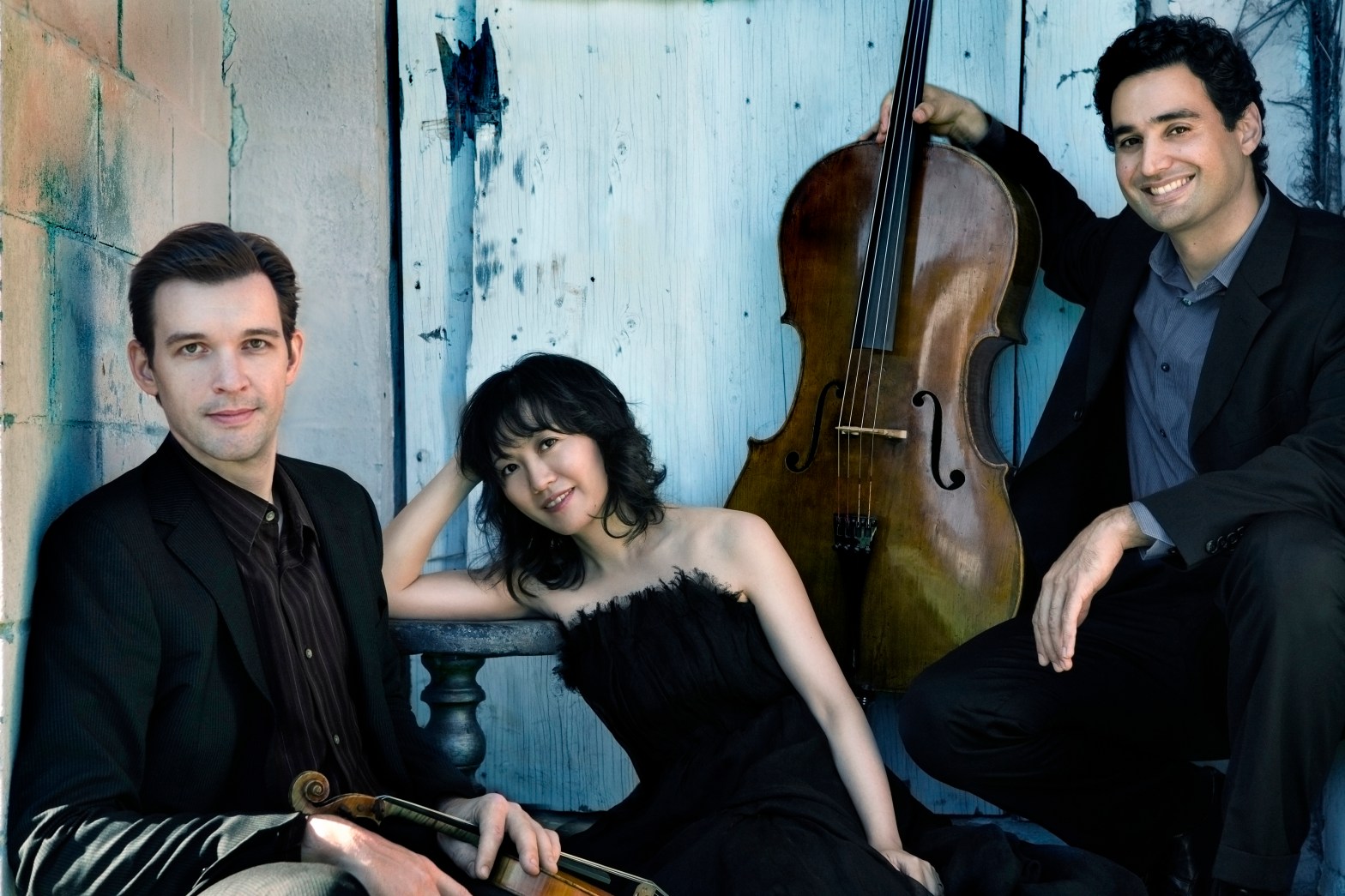
Hailed by The New Yorker as “destined for great things,” the Horszowski Trio pulls inspiration from Horszowski’s musicianship, integrity, and humanity. Trio members Jesse Mills, Raman Ramakrishnan, and Rieko Aizawa devote themselves to an extensive catalog of repertoire spanning from the traditional to the contemporary. Based in New York City, the trio members teach at Columbia University and Longy School of Music of Bard College.

On Sunday, September 3, the ensemble performs Daron Hagen‘s Piano Trio No. 2: “J’entends” (1987) alongside the music of Schubert and Mendelssohn.

PROGRAM NOTE

“Nadia Boulanger’s last words are said to have been “J’entends une musique san commencement et sans fin.” (“I hear a music without beginning or end.”) In a 1987 program note for the premiere at Alice Tully Hall, the composer wrote, “Grand Line was my first meditation on this statement, and this trio is the second. In it, I am attempting to manipulate time the way that a visual artist manipulates space. Various musical ideas — each of which progresses at its own speed — are juxtaposed, overlapped as transparencies, and mixed as colours over a long, spun out melody which is to the piece what a canvas is to a painting.”

The trio begins with a tutti statement of the work’s main harmonic and melodic ideas. (This movement, while retaining its original identity as the opening rondo of the piano trio, also served as the ‘short score’ for the first movement of Hagen’s Symphony No. 2.)

The second movement develops the first movement’s ideas while overlaying a program of sorts — Hagen writes, “I was inspired by Degas’ painting Interior — the Rape for the emotional ambiance of this movement.” Through-composed, the dialogue between “pure” music and “program music” mirrors the friction in Degas’ painting between “decorative” and “narrative” elements.

The third movement, Minute Scherzo, is another of Hagen’s sixty-second-long musical palindromes, this time with a neurotic, peculiar, and somewhat hysterical quotation of Beethoven’s Grosse Fuge at its center-point. The final movement, entitled Quodlibet (a theological or philosophical issue presented for formal argument or disputation or, in music, a medley) takes the material from the preceding movements and makes a collage of it while moving toward a broadly romantic statement of what Hagen describes as “the unabashed melody which has been present in various forms, and struggling to come forward, since the beginning of the piece.”

Winner, 1st Prize, the Barlow Endowment International Composition Prize for Chamber Music, 1985, J’entends was commissioned by the Lehner Trio and premiered by the ensemble at Alice Tully Hall, Lincoln Center, New York City, on 7 April 1987.”

— Original Program Note by Daron Hagen

Source: Piano Trio No. 2: “J’entends” — Daron Hagen

Duo for Violin & Cello at Moab Music Festival – Daron Hagen

Violinist Kristen Lee and cellist Clancy Newman take the stage of the Moab Music Festival. The ensemble performs Daron Hagen‘s Duo for Violin and Cello on Friday, September 1.

About Duo for Violin and Cello

In the repertoire for solo violin and cello, the Ravel sonata stands out as the singular masterpiece, the work all subsequent composers had to measure themselves against. Hagen acknowledges this debt by making the first movement of his duo an Homage a Ravel. He borrows Ravel’s thematic material and style, but combines them in his own unique way. Each instrument takes the lead in turn, while the other plays arpeggios or double stops. The effect is to make the sound fuller, as if it were a much larger ensemble. Hagen’s gift for melody is clearly revealed in the slow movement, “Love Song.” Again, the parts take turns, playing either the melody or a repeated rhythmic motif, occasionally coming together to sing in harmony. As in a love story, the two express their individuality and then create something greater than themselves by joining together.

The Performers

Kristin Lee (Arthur Moeller photo)

A recipient of the 2015 Avery Fisher Career Grant, as well as a top prizewinner of the 2012 Walter W. Naumburg Competition and the Astral Artists’ 2010 National Auditions, Kristin Lee is a violinist of remarkable versatility and impeccable technique who enjoys a vibrant career as a soloist, recitalist, chamber musician, and educator. “Her technique is flawless, and she has a sense of melodic shaping that reflects an artistic maturity,” writes the St. Louis Post-Dispatch, and The Strad reports, “She seems entirely comfortable with stylistic diversity, which is one criterion that separates the run-of-the-mill instrumentalists from true artists.” Born in Seoul, Korea, Lee began studying the violin at the age of five, and within one year won First Prize at the prestigious Korea Times Violin Competition. In 1995, she moved to the United States and continued her musical studies under Sonja Foster. Two years later, she became a student of Catherine Cho and Dorothy DeLay in The Juilliard School’s Pre-College Division. In January 2000, she was chosen to study with Itzhak Perlman after he heard her perform Mendelssohn’s Violin Concerto with Juilliard’s Pre-College Symphony Orchestra. Lee holds a Master’s degree from The Juilliard School, where she studied with Itzhak Perlman and Donald Weilerstein, and served as an assistant teacher for Perlman’s studio as a Starling Fellow. She is a member of the faculty of the Aaron Copland School of Music at Queens College.

Clancy Newman (Lisa-Marie Mazzucco photo)

Cellist Clancy Newman, first prize winner of the prestigious Walter W. Naumburg International Competition and recipient of an Avery Fisher Career Grant, has had the unusual career of a performer/composer. From Albany, NY, he began playing cello at the age of six, and at twelve he received his first significant public recognition when he won a Gold Medal at the Dandenong Youth Festival in Australia, competing against people twice his age. In the years that followed, he won numerous other competitions, including the Juilliard School Cello Competition, the National Federation of Music Clubs competition, and the Astral Artists National Auditions. He holds degrees from Juilliard and Columbia University. His teachers have included David Gibson, Joel Krosnick, and Harvey Shapiro.

The Festival

The Moab Music Festival was founded in 1992 by New York based musicians Michael Barrett, pianist/conductor and violist Leslie Tomkins. On a rare vacation, the husband and wife team fell in love with the red rocks of Moab, and were inspired to combine the magical landscape with the joys of music-making. “Starting a music festival seemed like the perfect way to make sure we would return again and again,” says Tomkins.

Now in its 25th year of music in concert with the landscape, the award- winning Moab Music Festival is noted for its distinctive programming, superb performances and intimate concert experiences of chamber music, traditional, jazz, Latin and music of living composers. The 20 concerts of the 2017 season are held in a variety of indoor and outdoor venues around Moab, with the Festival’s signature events, the Grotto Concerts, taking place in a pristine wilderness grotto 30 miles down the Colorado River, reached by jet boat. A 3 day / 2 night Musical Raft Trip through Westwater Canyon immediately precedes the Festival, and a 4 day / 3 night Musical Raft Trip through Cataract Canyon immediately follows the Festival.

The Moab Music Festival, from its inception, has been committed to music education and cultural enrichment in the Moab area. It has an annual goal of reaching all children in the Grand County Schools, providing assemblies with visiting musicians for students during the Festival. Educational experiences for interested music lovers of all ages are also provided at other times of the year through an artist-in-residence program.

Source: Duo for Violin & Cello — Daron Hagen

Juliana Hall Commissioned for Lynx Project’s “Autism Advocacy Project”

As a prolific art song composer, Juliana Hall is no stranger to the idea of elevating and amplifying the voices of writers through music. But as one of five composers selected by art song group Lynx Project, Hall is exploring a new challenge: setting to music the often unheard voices of individuals with autism. This endeavor is part of Lynx Project’s “Autism Advocacy Project.” The four exceptional youth, aged 12-17 are primarily non-verbal, and they communicate by pointing to letters on a board in a process called the Rapid Prompting Method.

Lynx Project co-director Caitleen Kahn says, “Art alone cannot change the world, but art can create conversations — and conversations can change the world.” It is Lynx Project’s hope that this project will start a conversation about autism, about acceptance and about the universality of the human condition in a way that will, slowly but surely, help transform the world.

“For my contribution,” says Hall, “I have written a small cycle of three songs for tenor and piano—Great Camelot—on the wonderfully poetic and deeply beautiful words of Sameer Dahar.” Sameer is a strong advocate for those who have no voice. He uses an iPad and letterboards to spell and type for communication. Despite the challenges inherent in autism, he is successfully pursuing his studies at the Ohio Virtual Academy online school and was inducted into the National Junior Honor Society. His goal is to become an astrophysicist and writer. He is currently typing a book describing his alternative experience living with autism. Sameer participated on a self-advocacy panel at the 2014 and 2015 USAAA World Conference and presented his first PowerPoint presentation on his life experience with nonvocal autism, at the 2015 SAAA World Conference.

World Premiere performances of the “Autism Advocacy Project” songs by Juliana Hall and the other four commissioned composers (Joel Balzun, Emily Cooley, Aristea Mellos, and Travis Reynolds) will take place on October 27 & 28, 2017 in Cincinnati.

Read more about the Lynx Project’s Autism Advocacy Project:

https://www.lynxproject.org/aap

http://www.schmopera.com/art-song-initiative-commissions-texts-by-children-with-autism/

http://www.journal-news.com/news/local/lakota-graduate-current-student-partner-autism-advocacy-project/dj3zk5BAPm9fQ6dTFVSc9L/

https://www.lynxproject.org/single-post/2017/09/12/Music-hailed-as-brilliant-beguiling-exquisite-meet-Juliana-Hall 

Juliana Hall album earns Fanfare, Voix Des Arts, and Gramophone reviews

Three major recording magazines praised Juliana Hall’s newest album Love’s Signatures for its sensitivity, power, beauty, and inspiration.

Juliana Hall‘s album “Love’s Signatures: Songs for Countertenor and Soprano” features the stunning voices of Darryl Taylor and Susan Narucki. Since its release, the album has garnered positive critical acclaim from critics. The album highlights three art song collections.

O Mistress Mine (2016) is a set of 12 songs for countertenor and piano based on William Shakespeare texts.

Syllables of Velvet, Sentences of Plush (1989) is a collection of seven songs soprano and piano on letters of Emily Dickinson.

Propriety (1992) is a set of five songs for soprano and piano on poems by Marianne Moore.


Fanfare, review excerpt

Written by Colin Clarke

Love’s Signature is the title of this release: how characters reveal human experiences of love in the poetry and writing of Shakespeare, Emily Dickinson, and Marianne Moore. Juliana Hall specializes in art song, and has composed over 40 song cycles. 

…the first song-cycle, the 41-minute O Mistress Mine (2016), boasts the composer at the piano…Hall sets 12 texts from 10 Shakespeare plays…the cycle has a trajectory, from first flush of youthful love, journeying through to Love’s deeper qualities….Hall’s own piano playing is exemplary and, where appropriate, powerful, but it is the obvious connection between her and Taylor that defines the success of this performance.

The final offering, Propriety (1992), came about as the result of a search for poetry about music. The contents of the poems often have a personal element for Hall, referring to episodes in her own history. The result of this seems to be the tenderness of the setting. It is from these poems that the disc’s title, “Love’s Signature” (that is, music itself) comes. Donald Berman confirms his status as a superbly equipped pianist as well as a sensitive accompanist by tackling the taxing piano part to “Carnegie Hall Rescued” with swagger and aplomb (listen, too, to his superbly characterful staccato in “Dream” or his carefully considered use of pedal in “Propriety”). The poem “Carnegie Hall Rescued” tells of the part Isaac Stern played in that hall’s history. Hall’s music is narrational here, certainly: She reacts to each passing nuance of the text, and for this sort of detail, Narucki is surely the perfect interpreter. Narucki’s way with the lines of “Propriety” is superbly varied and, on occasion, verges on the magical.

To read the review in its entirety, click here. 


Gramophone, review excerpt

Written by Donald Rosenberg

The American composer Juliana Hall has devoted herself to the art song for nearly three decades. Her sensitivity to words is on impressive display on Love’s Signature, which features settings of texts by Shakespeare, letters by Emily Dickinson and poems by Marianne Moore. In their first recordings, these songs show Hall to be a composer who savours lyrical lines and harmonies peppered with gentle spices…Dickinson’s words come across with crystalline clarity in Hall’s tender incarnations, which capture both the genial and witty sides of this most versatile of American poets.”

To read the review in its entirety, click here. 


Voix des Arts, review excerpt

Written by Joseph Newsome

… When joining words with music, gifted American composer Juliana Hall perhaps does not consciously set out to create songs that close the circuits via which
emotional currents flow from the individual to the universal, but the three song cycles recorded for MSR Classics’ new disc Love’s Signature reveal her extraordinary talent for crafting music that translates the meanings of texts into sounds that can be felt as well as heard. Whether handling the words of William Shakespeare, Emily Dickinson, or Marianne Moore, Hall exhibits an uncanny faculty for
amplifying the innate musicality of poets’ diction. Placed by MSR Classics’ engineering within an aural ambiance that recalls a small recital hall, the sound both intimate and ideally spacious, the performances that inscribe Love’s Signature upon the listener’s conscience restore faith in music’s still-potent force for positive change even in troubling times.

O Mistress Mine is that rarest of achievements in Art Song: a true cycle of songs that both convey a cumulative narrative and are individually effective. Settings of texts by William Shakespeare, the twelve songs guide the listener along an emotional journey in which gentle humor and pathos thrive in one another’s company…Hearing all of the songs on this disc, it is apparent that Hall does not compose with the goal of steeping her music in a purposefully-concocted brew of modernity: rather, she follows the texts, responding to the inherent music of the words and conjuring sound worlds appropriate to each passage from an economy of means. Each of Hall’s notes has a purpose as clearly defined as that of each of Shakespeare’s words. The songs’ novelty is wholly organic, never contrived, and the composer perpetuates the American Art Song tradition of Beach, Barber, and Bolcom with music of integrity.

…Like Taylor, Narucki is not a songbird for whom beautiful but emotionally blank sounds are the ultimate goal—and neither, for that matter, is Hall. These are artists—and these are performances—that
aim for the heart and the mind at once, and they do not hide behind polite façades when the truths of which they sing are ugly. Art in any of its forms is never further than a single generation from extinction. Man’s nature is to fear, ridicule, and reject the unknown, all of which actions are seemingly far less strenuous than seeking to understand, accept, and embrace new concepts, cultures, and individuals….Stasis is fatal to the survival of art, making the work of an artist like Juliana Hall crucial not only for the continued freshness of serious music but for its very life. Love’s Signature is a breath of life that fills the lungs with the air of song and the soul with the joy of recognizing a compositional voice of acuity and ingenuity. Insecurity, instability, and indecision abound, but the common sense of good music performed well still prevails. These are times to try men’s souls, but Juliana Hall has invented sounds that silence the din of discord.

To read the review in its entirety, click here.
James Sclater wins Mississippi Institute of Arts & Letters Award

Image result for mississippi institute of arts and letters

Each year the Mississippi Institute of Arts and Letters honors creative individuals with an award in their specific field.

First bestowed in 1980, these prestigious awards are presented in seven categories: Fiction, Non-fiction, Visual Art, Musical Composition (Concert), Musical Composition (Popular), Photography, and Poetry. The Institute’s juried competition is one-of-a-kind in the state. Our carefully selected judges, chosen from out of state, are prominent in their field. Supported by Mississippi Institutes of Higher Learning, MIAL is privately funded, self-perpetuating, and non-profit.

James Sclater won the award for Classical Music Composition for his six-movement work for voice and piano, Carmine Natura Creaturae, based on poems by Viola Dacus. This is Sclater’s seventh award in this category; his first was in 1981.

Source: MISSISSIPPI INSTITUTE OF ARTS AND LETTERS – Home

Modern Singer Magazine interviews Juliana Hall

Modern Singer Magazine is written for singers by singers. The magazine offers a variety of information for readers, from artist showcases to audition tips to advice on updating one’s recital wardrobe, the magazine offers perspectives in all aspects of a singer’s life.

The Modern Singer recently interviewed and featured Juliana Hall. The interview, led by Editor-in-Chief Ellen Hinkle, touched on Hall‘s passion for Art Song, her inspiration for new music, and favorite composition in her catalog.

Juliana Hall
Juliana Hall

Hall states, “I write art songs to share poetry. Poets see truth and beauty in even the most ordinary of things and that is what I wish to express… The structure of the text and musical architecture of my song should be in sync in order to express the truth and beauty a particular text illuminates. That truth and beauty is outside of me.” She goes on to reflect on how her technique for inspiring new music has changed over time. When Hall first began composing, she would focus on an image. “When asked to write a song cycle for Dawn Upshaw, I had an image of dark interspersed with light.” Nowadays, Hall turns to her poetry books to “see if anything sticks. The type of voice I am writing for often guides these questions.”

To read the entire interview, click here. 

To learn more about Juliana Hall, click here. 


Arioso premieres Gwyneth Walker on Vermont tour

Arioso is Vermont’s acclaimed chamber music ensemble, performing works for piano, voice, viola, and cello. Members of the ensemble premiere Gywneth Walker‘s From the Depths of the Soul (2016) for contralto and viola on August 31 (Northfield, VT), followed by performances in Richmond, VT (September 1) and St. Albans, VT (September 3).

Members of Arioso

Arioso is made up of Linda Radtke (alto), Allison Bruce Cerutti (piano), Elizabeth Reid (viola), and Michael Close (cello). The ensemble devotes its repertoire to new music by Vermont composers.

From the Depths of the Soul explores the powerful combination of the contralto voice and viola, “characterized by depth of sonority,” writes Walker. Each song in the collection is an arrangement of African American spirituals.

Source: About – Arioso

Gramophone Magazine reviews new albums from Su Lian Tan & Michael John Trotta

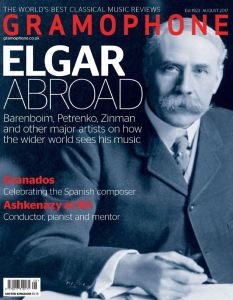
Since 1923, Gramophone Magazine continues to devote itself to reviewing classical music, particularly recordings.  The August 2017 issue featured two albums in the ECS Publishing Group catalog: Seven Last Words by Michael John Trotta and Revelations by Su Lian Tan.


Seven Last Words, review excerpt

By Guy Rickards

“Trotta’s musical style is fairly straightforward….not unlike that of Eric Whitacre or Ēriks Ešenvalds. The performance is more than competent, rendering clearly Trotta’s relentlessly euphonious choral-and-orchestral textures…Clear sound.”

Click here to read the entire review. 

To read more about the album, click here.

Revelations, review excerpt

By Laurence Vittes

“Writing music for friends and colleagues must be one of the greatest joys of the composer’s art. Here it is demonstrated by three absorbing pieces written by Su Lian Tan

Life in Wayang, commissioned by the Takács Quartet, is wonderfully dramatic music that reveals its puppet-theatre origins in the skeletal nature of its framework and the quicksilver disconnects between delicacy and passion….It is forcefully played by the Jupiter Quartet…The sheer relish with which Bruce Brubaker swings into Tan’s Orfeo in Asia, commissioned by Blair McMillen, is a response to the way the composer’s beautiful, often clangorously powerful writing for the piano…”

Click here to read the entire review.

To read more about the album, click here.

Simon Carrington conducts music by Ferko, Gregorio, & Larsen

The Norfolk Chamber Music Festival (Norfolk, CT) is one of North America’s oldest active summer music festivals. On August 19, the Norfolk festival featured a Choral Festival, directed by Simon Carrington. This remarkable program complete with a first-rate choir and chamber orchestra has always been a highlight of the Norfolk summer. The concert featured three E. C. Schirmer composers: Frank Ferko, Joseph Gregorio, and Libby Larsen.


Frank Ferko
Frank Ferko

Frank Ferko‘s “Spring” from The Seasons, based on a poem by Robert Frost, is a large work for SATB chorus and string quartet. The composer writes, “Although certain types of weather, such as wind or rain, may occur in any of the seasons, the descriptions of weather in these four poems present specific weather conditions which commonly occur in each of the four seasons: a still, hot, sultry day interrupted by the movement of a light breeze from the hills (summer); the cooling morning mists and light frost which signal the coming of winter (autumn); the bitter iciness of fierce winds and frozen air-in this poem, further compared with man’s ingratitude (winter); the warm rains and southerly winds that melt the ice and bring about new life (spring).

Throughout this piece various musical devices are employed to underscore or even ‘interpret’ the words. These devices include text painting, contrapuntal structures (double canon and fugue), and dramatically shifting harmonic colors as each season unfolds. The contrasting performing forces of mixed choir and string quartet are particularly well-suited for presenting, very colorfully, the various musical depictions of the weather conditions and characteristics of each of the seasons.”

Joseph Gregorio‘s When Music Sounds is a setting of a Walter de la Mare text. Commissioned and premiered by the Penn State Glee Club, this work for SATB chorus and chamber ensemble is an ode to the power of music. Available from Areté Music Imprints. 
Joseph Gregorio
Joseph Gregorio

Libby Larsen
Libby Larsen
Libby Larsen‘s “Comin’ to Town” from The Settling Years is one of three pieces from a collection based on poetry of American pioneers. It is scored for SATB chorus, wind quintet, and piano. Larsen states, “The texts are full of a kind of raw energy, swashbuckling attitude, and profundity of heart and commitment characteristic of those settlers west of the Hudson. I had also looked at the more erudite essays of Coleridge-Taylor, Thoreau, and Emerson but chose the rougher stanzas because the primitive voices, the pioneers, were profound, simply in the way they expressed the nature of their experiences. The first piece, ‘Comin’ to Town,’ is about cowboys after a month on the range—bawdy, rowdy, and raucous…The Settling Years was commissioned and premiered by The Singing Sergeants and the United States Air Force Band for the 150th anniversary of the Music Educators National Convention.”

Source: Sat Aug 19 – Norfolk Chamber Music Festival

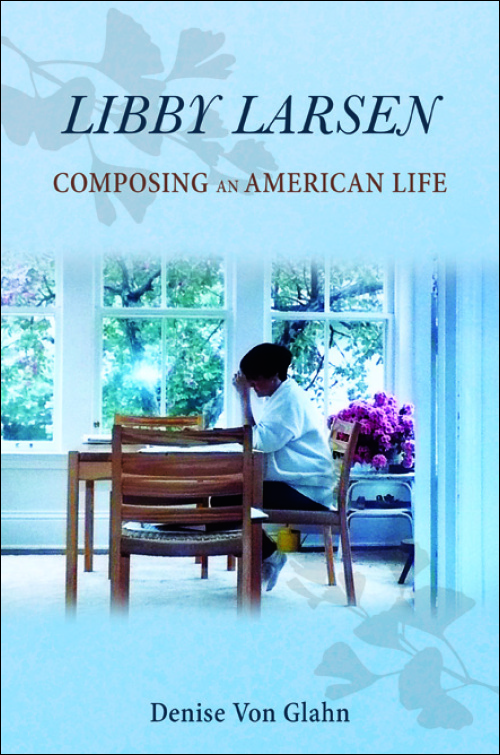
UI Press | Denise Von Glahn | Libby Larsen: Composing an American Life

The fullness of a life lived allegro.

Denise Von Glahn, Curtis Mayes Orpheus Professor of Musicology at Florida State University,  is the author of Libby Larsen‘s biography, Libby Larsen: Composing an American LifeVon Glahn is also the director for the Center for Music of the Americas and wrote three award-winning books prior to this publication. The book is available from University of Illinois Press.

SYNOPSIS

Libby Larsen has composed award-winning music performed around the world. Her works range from chamber pieces and song cycles to operas to large-scale works for orchestra and chorus. At the same time, she has advocated for living composers and new music since co-founding the American Composers Forum in 1973.

Denise Von Glahn’s in-depth examination of Larsen merges traditional biography with a daring scholarly foray: an ethnography of one active artist. Drawing on musical analysis, the composer’s personal archive, and seven years of interviews with Larsen and those in her orbit, Von Glahn illuminates the polyphony of achievements that make up Larsen’s public and private lives. In considering Larsen’s musical impact, Von Glahn delves into how elements of the personal—a 1950s childhood, spiritual seeking, love of nature, and status as an “important woman artist”—inform her work. The result is a portrait of a musical pathfinder who continues to defy expectations and reject labels.

Publication supported by grants from the Dragan Plamenac Endowment of the American Musicological Society, funded in part by the National Endowment for the Humanities and the Andrew W. Mellon Foundation; The Florida State University, Office of Research; The Florida State University, College of Music; and the Henry and Edna Binkele Classical Music Fund.

REVIEWS

“Excellently researched, beautifully organized, and entertainingly written. Presents a sensitive, wonderfully collaborative portrait of an ‘exuberant,’ highly productive, and driven woman who dealt with all the turbulence, social change, and musical vicissitudes of her social and musical worlds.”–Ellen Koskoff, author of A Feminist Ethnomusicology: Writings on Music and Gender

“A scholarly contribution of great importance. Fills in some of the gaps of a leading female composer of our time. Von Glahn’s ‘collaboration’ with Libby Larsen is surely a positive factor in ensuring an unprecedented level of detail.”–Kay Kaufman Shelemay, author of Soundscapes: Exploring Music in a Changing World

Click here for more information: UI Press | Denise Von Glahn | Libby Larsen: Composing an American Life

Design a site like this with WordPress.com
Get started