Michael John Trotta Scene4 Interview: Music Born of Necessity

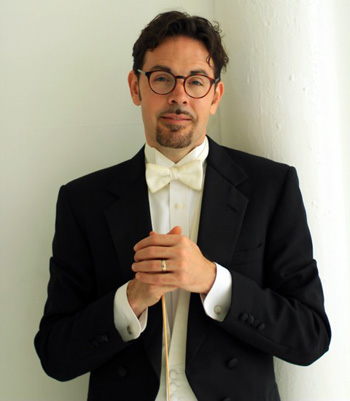
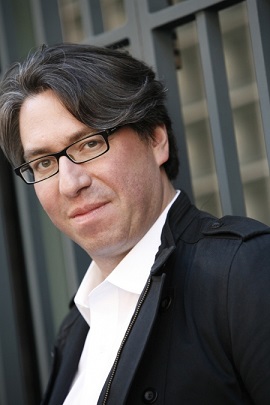
Michael John Trotta

Scene4, an international magazine of arts and culture, featured Michael John Trotta in the July 2017 edition of the magazine.

The article begins with Rainer Maria Rilke’s quote, “The work of art is good if it has arisen out of necessity.” Trotta notes this quote defines the current season of his career. “Everything is a tradeoff,” he writes. “I have traded one classroom in one location for many classrooms in many locations. There is so much fine music being made…across the country. I now have more time to work with many groups from all over America and to take on the larger works when the need arises.”

Later in the article, Trotta examines what his music offers both the performers and the audience. “As I have searched for my own voice in music, I have always been guided by the tradition that has gone before me, yet I have sought to present that tradition in an innovative way. When listening to new music, I find that there are oftentimes when the music is too much like that which has gone before. At the other end of the spectrum, there is music that is so new, so innovative, that it risks lacking relevance for the performers or for the listeners, or even worse, lacking relevance for BOTH performer and listener.”

To learn more about Trotta‘s music and to read the article in its entirety, click here.

Grant Park debut of Roustom work earns positive reviews

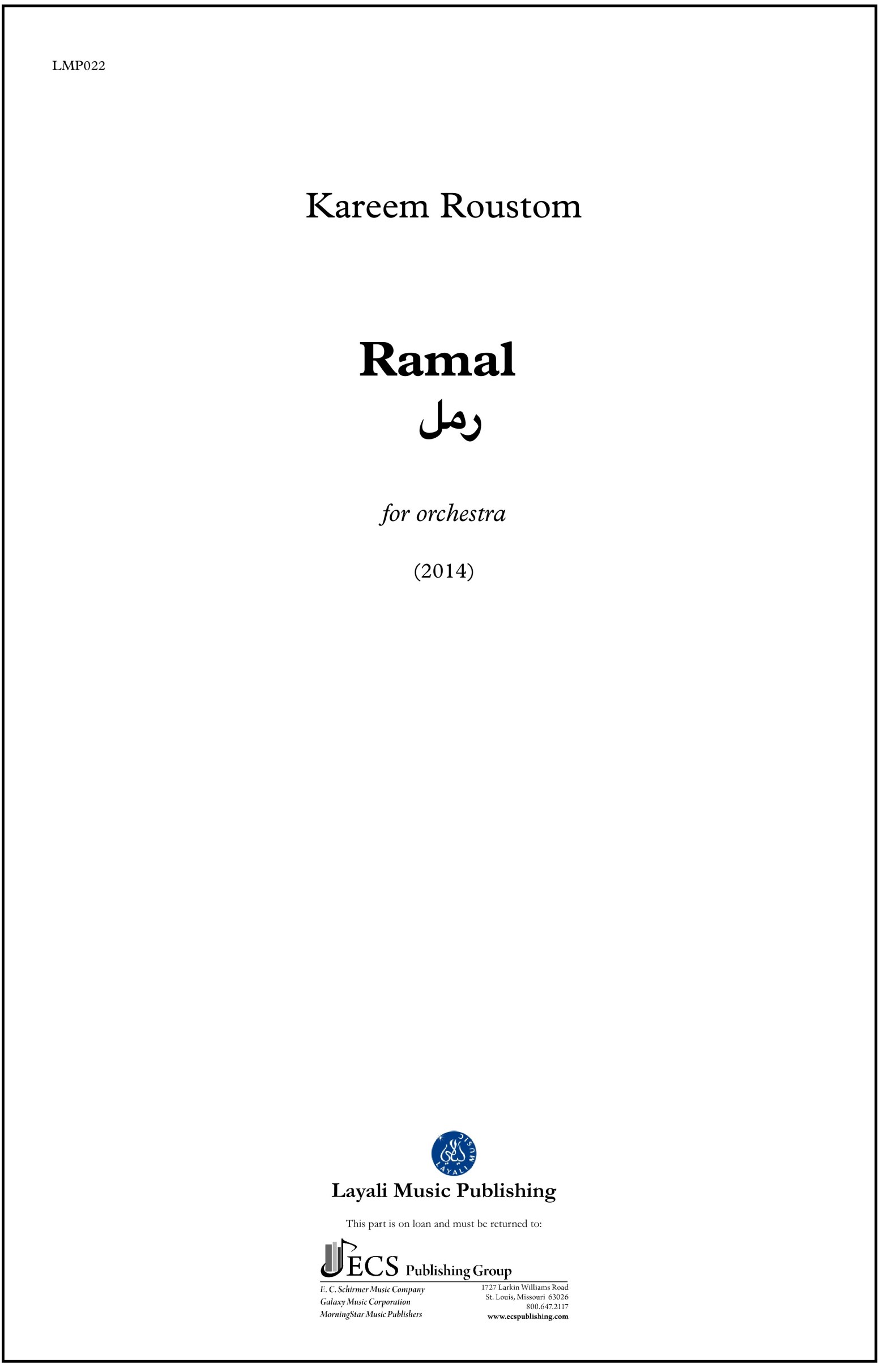
On July 12, 2017, conductor Fawzi Haimor led the Grant Park Orchestra in a tour-de-force program, which included the Midwest premiere of Syrian-born composer Kareem Roustom‘s Ramal. The performance was met with widespread enthusiasm from critics, both for the Grant Park Orchestra’s performance under Haimor’s leadership and for Roustom’s music.


Conductor Fawzi Haimor leads the Grant Park Orchestra in Kareem Roustom's "Ramal" to begin a program at Millennium Park's Pritzker Pavilion in Chicago on Wednesday.
Conductor Fawzi Haimor leads the Grant Park Orchestra in Kareem Roustom’s “Ramal” to begin a program at Millennium Park’s Pritzker Pavilion in Chicago on Wednesday. (Chris Sweda/Chicago Tribune)

John von Rhein of the Chicago Tribune was pleased to see “gifted Arab-American classical musicians get [the] forum they deserve.” He writes, “For many Muslim and Arab classical musicians living in the West, it is important to come forward and express their identity. Some have chosen to make political statements through their music, as composers throughout the centuries have done. Others have chosen to draw wider attention to the enormously rich musical tradition of Islam. Others simply write their music. Whatever the case, there are major voices here needing to be heard. The Grant Park Music Festival provided a rare forum for two such musicians… The Chicago-born conductor Fawzi Haimor… and Damascus-born composer Kareem Roustom.

Von Rhein goes on to applaude Ramal: “Structurally, Ramal is informed by the poetic meters of pre-Islamic Arabic verse, pushing forward in irregular patterns across a tonally centered canvas for large orchestra. While not programmatic, the 12-minute opus has a subtext of strife, an unsettled tone that speaks to the devastating civil war now racking the composer’s homeland. The music, he told me, represents his angry and appalled reaction to the violence that has displaced members of his family.

It’s a most powerful piece that works perfectly well when heard as pure music, divorced from its political associations. Nor does it attempt a fusion of Arab and Western modes: I was unable to detect much of the former, but I did catch suggestions of Benjamin Britten in his glowering, Sinfonia da Requiem manner. The opening onrush of protesting brasses over roiling strings settles into a series of contrasting episodes tied together with canny craftsmanship and gut-level force.”

Click here to read the entire Chicago Tribune review.


The review in the Chicago Classical Review, written by Lawrence A. Johnson, focused primarily on Fawzi Haimor’s skill and technique as a conductor. However, Johnson did reflect on his impressions of Kareem Roustom‘s Ramal.

“Haimor opened the evening with Ramal by Kareem Roustom. The title of this 2014 work refers to one of the three meters of ancient Arabic poetry. Though Ramal has no direct program,Roustom says, the current state of the world and the ongoing devastation in his native Syria clearly had some influence.

Ramal is launched with a series of violent metallic chords and the 12-minute work is characterized by a nervous driving energy. There are fleeting respites with a brief lyrical section and an elegiac passage for solo violin evoking a mournful Middle Eastern flavor. Yet a restless agitation dominates with the ceaseless tempo fluctuations seeming to reflect the unsettled religio-political strife of his homeland.

This is strong, defiant music, crafted with skill and scored with confidence. Haimor–himself of Lebanese-Jordanian background–led the Grant Park musicians in a committed and muscular performance with concertmaster Jeremy Black contributing an evocative violin solo.  The Syrian-American composer was on hand to share in the enthusiastic applause.”

Click here to read the entire Chicago Classical Review. 

Snow Lay on the Ground receives rave reviews

Snow Lay on the Ground CD
CD180

Julian Wachner and the Grammy-nominated Choir of Trinity Wall Street, The Trinity Youth Chorus, and the NOVUS NY orchestra collaborated to create The Snow Lay on the Ground (CD 180). A stunning recording of nine brilliant carol settings and three organ improvisations performed by Wachner, the album continues to garner widespread enthusiasm from critics.


Julian Wachner continues to do fantastic work with the Choir of Trinity Wall Street, as their atmospherically recorded The Snow Lay on the Ground: Festive Carols from Trinity Wall Street (Arsis) shows. Together with the Trinity Youth Chorus and Novus NY, these renditions of Wachner ‘s arrangements, along with his four unedited, first-take organ improvisations, score a 10. Dynamics are excellent for CD, with the beginning of ‘Joy to the World’ strong enough to bolster a crumbling empire.”– Jason Victor Serinus, Bay Area Reporter

Julian Wachner — composer, arranger, conductor, organist — is the director of music and the arts at New York’s historic Trinity Episcopal Church on Wall Street.  The Snow Lay on the Ground: Festive Carols from Trinity Wall Street shows off all his talents, with the assistance of the Choir of Trinity Wall Street, the Trinity Youth Chorus and Novus NY, the church’s resident contemporary music orchestra. Wachner often takes a maximalist approach to familiar carols but brings something new and thoughtful to others, and his organ improvisations are creative and enlightening.”– Sarah Bryan Miller, St. Louis Post-Dispatch, 2016

For more information about The Snow Lay on the Ground: Festive Carols from Trinity Wall Street, click here.

Fanfare Magazine reviews Revelations, music of Su Lian Tan

All reviews were reprinted by permission of Fanfare Magazine. 


Let’s be clear from the off: Wants List material. Malaysian-born in 1966, Su Lian Tan has a uniquely expressive voice. My colleague Barnaby Rayfield, interviewing Tan in Fanfare 34:4, waxed lyrical about Tan’s achievements (FTCL, or Fellow of Trinity College, London, by age 17; postgraduate degrees from Princeton and Juilliard; flute prodigy). But it is the sheer force of invention, an invention that is clearly heart-based, that sends the listener heading for the repeat button after the final item has finished.

The word “Wayang” in the title of the first piece, Life in Wayang, commissioned by the Takacs Quartet who premiered it in Vermont in 2003, refers to a puppet theatre found in the Malay world, particularly Indonesia and Malaysia. Shadow puppetry depicts stories with their roots in Hindu epics to the strains of gamelan orchestras. These stories tend to be in three parts, as is Tan’s piece: “Gods Descend”; “Ballade”; and “The Chattering Strings”.   Programmatic background is important here, therefore: the hesitant solo violin at the opening is a beckoning into this world. If the traditional idea of a string quartet is of civilised discourse between four protagonists, this expands that out into a fully dramatic performance with a cast of four. Gamelan imitation is part of this, but it is the sheer intensity of utterance that is so spell-binding, particularly in as fine a performance as this one. The Jupiter String Quartet (a “particularly intimate group” as the notes put it, given that there is a pair of sisters, one of which is married to the cellist) is a fine ensemble, confident and a hundred percent sure of its intonation throughout. The central Ballade has the rather ambitious idea of charting the various shapes in which love manifests; it holds intimacy, but there are also disturbances to the fabric. Different modes of expression rub shoulders: the modernist, the modernist/oriental and the Romantic. The recording could benefit from a touch more depth in some of the more extreme outbursts here, but there is no denying the commitment of the performance. The third and final movement returns us to the idea of theatre; at its height, the conglomeration of lines could almost convince one that this is a string orchestra, not a quartet, that is playing.

The haunting end to Life in Wayang leads on naturally into the piano piece Orfeo in Asia, a celebration of the Greek poet/musician by depicting an imagined journey to the Far East. Different musics inform the first movement, “Invocation,” from Islamic chant to minimalist music to pentatonicism. Bruce Brubaker is a fabulous interpreter, sensitive to the harmonic scenery but equally capable of that minimalist section where a harder touch is required. The recording seems a little thin in the mid to higher ranges. The central “Mysterious Voices and Dancers” is a hushed meditation before the very recognizable gamelan imitations that open “Metamorphosis” before a hectic chase begins. This final movement presents a journey through and a meshing of various strands; Brubaker is the perfect guide through this thicket of musical information.

Finally, Revelations, which combines all artists into a piano quintet. This work apparently “represents the intricacies of life as a scholar, a teacher, and a role model.” A contemporary take on Baroque counterpoint provides the fuel of the first movement (of two); this contrapuntal effect seems to make the music nod towards Schoenberg. The performance is brilliantly choreographed between the various lines; I choose my words carefully as there is more than a hint of sprightly play, even dance, at work. The work’s second movement concentrates on the “vocal” aspect of the cello as it “sings” the expansive melodies, with restrained, otherworldly textures around it. Daniel McDonough is the superb cello protagonist on this occasion.

A superb disc, well annotated (notes by Elizabeth Clendinning, Assistant Professor of Music, Wake Forest University) and shot through with fervent advocacy from the performers of music that demands to be heard. Colin Clarke


Chamber music is a strange beast; it can be transparent and small, it can sound grandiose and dramatic, like a symphony or opera. Often, a composer develops a style that follows one or another of these paths, but very few travel the while territory. Su Lian Tan is one of the rare exceptions, and no stronger case can be made for the diversity and complexity of her varied take on smaller ensemble music than this new Arsis disc.

It is something approaching ironic that the most majestic and the broadest conception is the smallest in terms of ensemble size; in fact, it’s a solo. Orfeo in Asia was conceived as an opera for piano, certainly an appropriate conception given Orfeo was a musically microhistorical figure. Bruce Brubaker is a perfect advocate for the very vocal complexities of the second movement, just as one example, in which two choirs are contrasted, in Islamic and Western European traditions, as our mythical hero, having been whisked away to Asia, comes to terms with multiple musical heritages. He takes all extrapianistic effects, rhythmic complexities and tempo relations in stride, voicing each sonority and accompanying melody with virtuosic assurance and emotive finesse. He is also wonderful in the more conventional chamber-music structures of the piano quintet that gives the piece its title as it veers from the terrifying and turbulent toward the gorgeous and serene. During the more heavenly moments, the real revelations of the piece, it would be difficult to imagine music of a more rapt stillness and timeless calm.

Brubaker’s collaborators are the superb and increasingly ubiquitous Jupiter quartet, and they return for Life in Wayang, a piece that Tan wrote originally for the Takacs Quartet. From its sparse upper-register opening, it is clear, again, that cultural gaps are being bridged, and that Tan has chosen interpreters more than up to the task. Within the first several seconds, the music maneuvers from microtonal pianissimo to shattering sonorities of wide-open thunderous invocation. Here, all aspects of chamber music’s delicate minutia and cosmic grandeur are distilled into a few gestures, also a rarity, especially in today’s world of flattened dynamics.

This is music whose complexity of vision is mirrored only by the rapidity with which it changes, or maybe by the fluidity with which it confronts genre, technique and history via tonal continua head-on. These are spectacularly engaging performances of excellent music by a truly imaginative composer. How many rarities can one disc offer? Marc Medwin


Fanfare readers have met composer-flutist-pedagogue Su Lian Tan in my interview of her in 37:1 wherein her CD Grand Theft and Other Felonies was reviewed. That disc focused on  flute chamber music by her and her colleagues, but the present one features her music in the genres of the string quartet and piano quintet, and so spotlights her only in her capacity as composer, rather than as performer on the flute.

The opening Life in Wayang was commissioned by the well-known Hungarian Takacs String Quartet, who premiered it at Tan’s school, Middlebury College in Vermont in 2003. The first movement describes our concepts of God and pious love. Tan’s portrayal of these largely ineffable concepts keeps all of the members of the quartet very busy with complex gestures, rhythms, and effects including glissando, pizzicato, harmonics, senza vibrato, and tremolo. Her harmonic language is no less complex in its alternation between dissonant and less dissonant sonorities. In one section, a gamelan-like ostinato in the middle voices provides a foundation for the wending lines in first violin and cello. The movement ends in a whisper, flowing beautifully into the following movement entitled “Ballade.” Here, the harmonic languages is orders of magnitude more tonal than anything in the opening movement, forming a profound and pleasing contrast. Several dramatic high points are reached en route to its quiet conclusion. The third movement opens with a playful pizzicato figure and frenzied passage work in the various instruments, as they converse with increasing vigor. As the narrative reaches a high point, the frantic quality fades away into a final quiet commentary.

Unfortunately, at times language simply fails to adequately communicate what needs to be said, and hearing this quartet has driven that point home to me in a rather dramatic way. Words cannot express the impact that this quartet has had upon me, as this is music that simply must be heard and not merely written about. This is an extremely important addition to the brobdingnagian body of string quartet literature, and the Jupiter String Quartet, playing with impeccable accuracy and verve, presents the piece in the best possible light.

Orfeo in Asia is a work for solo piano. Instead of chasing Euripides down into Hades, he is spirited away to Southeast Asia, where he learns to charm all living things and expand his musical skills. The three-movement work jumps around a good bit stylistically as it depicts Orfeo tuning his lyre to a pentatonic scale, imitating droning voices resembling Islamic chant as wafting over from a minaret, describing a coy woman enticing Orfeo with Minimalist thirds, or evoking a gamelan orchestra. Despite these widely disparate ideas, the piece holds together and convinces the auditor, although I do not believe it rises to the masterpiece level of Life in Wayang. Pianist Bruce Brubaker plays most sensitively and expressively throughout the work, as though he, at least, is convinced that the piece reaches the masterpiece level that I am denying it. (Please don’t get me wrong: This is nevertheless a good piece of piano writing!)

The disc closes with Revelations, a two-movement work for piano quintet. At least, I think it is, since neither the booklet nor the tray card gives precise information regarding the instrumentation for the work. It was commissioned by Paul Nelson for cellist Sophie Shao, but is exquisitely performed here by the Brubaker and the Jupiter Quartet. The harmonic language reverts more-or-less to the very complex harmonies of the opening movement of Wayang, as does its very busy texture. The devices that Tan employs so effectively in the earlier heard work are also employed in this work, and the impression upon the listener is equally profound. In the first movement, a figure comprised of 16th notes is tossed around effortlessly among the members of the quintet. These patterns are interspersed with dense clusters of tremolo notes, freely rhapsodic figures in the solo strings, and other devices to sustain interest throughout the movement. In the longer second movement, the cello, in its middle register, is intended to portray the human voice in an expressive line as it “sings” about human emotions ranging from the joyous and beautiful to the weary and tedious. The effect is one of heartfelt intimacy and piquancy that touches the soul of the listener in a profound way. I like this work as much as I do Life in Wayang, and the CD consequently receives my highest and most enthusiastic recommendation. David DeBoor Canfield


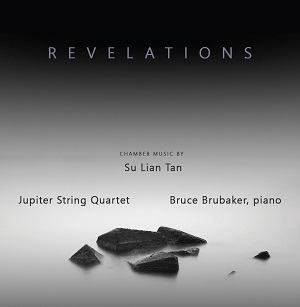
Click here for more information about Revelations (CD181).
 

Trinity Wall Street & Julian Wachner embark on European Tour

This month, the Choir of Trinity Wall Street and Julian Wachner begin an impressive tour with a three-concert stop in Norway, followed by two performances in the Netherlands.

Norway

The Grammy-nominated choir presents a series of early works while in attendance at the Stavanger Kammermusikkfestival with the music of Bach, Byrd, and Palestrina. Since 1991, Stavanger Kammermusikkfestival ranks as one of Norway’s top chamber music festival. The festival is both “totally surprising, and magnificent.”

The Netherlands

Wachner and the Choir of Trinity Wall Street later head to Utrecht for performances (September 1-2) at the Utrecht Early Music Festival. The performances are part of the 150 Psalms Project, an ode to choral music. In the span of one weekend, the festival will share 12 concerts featuring 150 psalms from 150 different composers. The project honors the 80th Anniversary of the festival.

The inspiration for this project spurs from the 150 songs found in the Book of Psalms. The topics found in the book span issues like justice, humanity, and compassion that are recurring in today’s society. The Trinity Wall Street Choir is one of four esteemed choirs to be performing at the event.

Source: TOTAL EMBRACE Trinity Church Wall Street’s 2017-18 Time’s Arrow Festival Surveys Complete Works of Anton Webern; Season Also Includes Bernstein Centennial Celebration, 150 Psalms at Lincoln Center, and Much More – 21C Media Group – Publicity. Digital Media. Consulting. For Music, Culture, & the Performing Arts

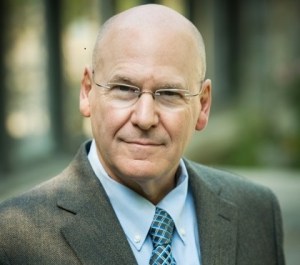
Interview with Composer of the Month: Stephen Chatman

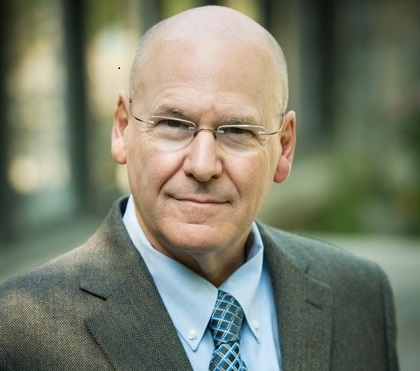
Stephen Chatman
Stephen Chatman

Revered as one of Canada’s most prominent composers, Dr. Stephen Chatman is the first Canadian to ever be short-listed in the Masterprize International Competition. This award-winning composer is recognized internationally and widely sought-after for commissions across the globe.

  1. How did you get involved in music?

    As a toddler, I began to sing before learning to speak; I have been involved in music as long as I can remember.

  2. What drew you to composing?

    I have always loved music and, like all children, had a vivid imagination and an urge to create. At about the age of 7, I began to compose by augmenting or changing the piano music I was learning. This led to short written original pieces and eventually, as a teenager, to longer pieces for various media.

  3. Our catalog includes music from you in a variety of genres. From piano to choral to orchestra and band, even opera, you’ve done it all. Do you find yourself using different approaches or processes when you compose for different genres? Do you have a favorite genre to write for?

    My approach to vocal or choral music varies from my approach to instrumental music. In vocal music, the text, as a starting point, strongly affects inspiration and the creative process. In general, my process is intuitive and unpredictable. Creativity is like magic–  I don’t really understand it– I just try to relax and flow with the muses. When the process is working, the work itself often dictates a path, informing me of what it needs or what comes next. Although not necessarily my favorite genre, composing choral music seems most natural for me. But I also love to compose chamber and orchestral music.

  4. Where do you look to find inspiration for new works?

    Actually, I find it more productive not to search for inspiration. In the creative process, I try to relax, remove extraneous thoughts from my mind, and let creativity consume me. Of course, this is easier said than done, especially in the initial stages. Improvisation at the keyboard can cure a creative block.

  5. You have been Professor of Composition at the University of British Columbia in Vancouver, Canada since 1976. How do you balance life as a professor while still finding time to write music?

    Teaching and composing are a balance just as teaching is a two way street. Composition students are influenced not only by their composition teachers but also by each other. As a composition teacher, I have always been influenced by my composition students, many of whom are exceedingly talented. Some have established impressive careers as composers. The creative environment and musical community are also critical. I have been able to balance teaching and composing for more than 40 years, although naturally, my productivity increases during university recesses.

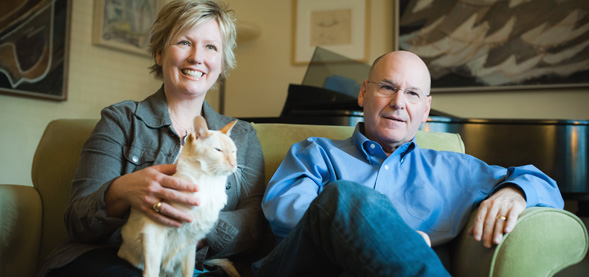
    Stephen Chatman & wife Tara Wohlberg
  6. What can you be found doing when you’re not teaching or composing?

    I have various interests and hobbies. Most importantly, I enjoy spending time with my wife and family. We enjoy socializing and traveling– most recently a safari in Tanzania! I’m a huge sports fan, especially NFL or CFL football and NHL hockey. History is another passion. After my retirement from teaching, I am thinking of learning to cook.

  7. Is there any recent or upcoming news you wish to highlight?

    I look forward to the release this year of several Centrediscs/Naxos new recordings or re-issued recordings of my music. Upcoming projects include a major commission for the Upper Canada Singers in Toronto. I also plan to compose another book of piano etudes and to return to composing art songs.


Click here to learn more about Stephen Chatman.

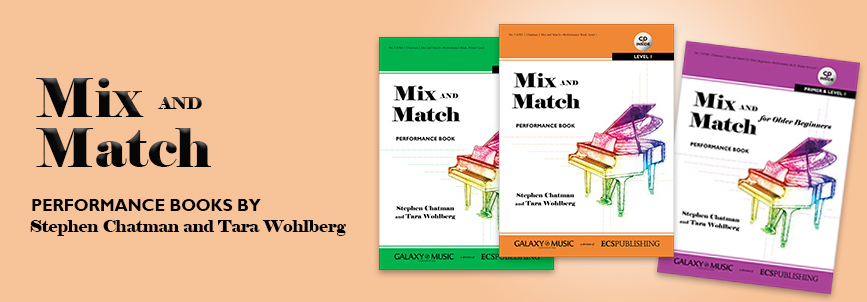
New Piano Method Books from Stephen Chatman: Mix & Match

Galaxy Music recently welcomed the new Mix and Match performance method series from dynamic duo, Stephen Chatman and Tara Wohlberg. The series is designed as a rare, innovative mix-and-match complement to any standard piano method book. We sat down with composer Stephen Chatman to learn more about the vision behind Mix and Match.

1. What was the inspiration behind Mix and Match?

The audio tracks include both demo and play-along tracks for each piece. The best way to use this tool may be for the student to first listen to the demo recording of the duet, then learn the student part, and then play-along with the version which includes only the teacher’s part. The student may play the piece as a solo or live duet with a teacher, friend or family member.

2. What makes these performance books unique from other performance series?

Several factors make these performance books unique:
1)  These books are a unique supplement to current method books, which systematically re-enforce pedagogical concepts.
2)  Through original pieces and arrangements, I explore an eclectic sonic world, where students can play, for example, Happy Birthday (the first level 1 piano  arrangement ever published) or sample a folk song, boogie, rag, minuet, Christmas carol or an arrangement of an timeless classic. Given my reputation as a composer and composition teacher, the original pieces are not typical pedagogical pieces. They are fresh, innovative and less conventional or predictable than pieces in other performance series.
3) The teacher duets, designed as concert pieces, are uniquely imaginative, harmonically rich, and engaging. Teacher accompaniments, while sometimes complex, are idiomatic and “audience friendly”.
4) The performance books loosely correspond in pedagogical approach to popular method books. However, they include very little written text, which would be redundant considering texts in existing method books.
5) The Mix and Match for Older Beginners book is a rare, essential addition to pedagogical repertoire.

3. Who is the Mix and Match series designed for?

The Mix and Match series is designed not only for any young beginner and level 1 piano student but also for any older beginner and level 1 piano student.  The Mix and Match for Older Beginners (primer and level 1) performance book omits illustrations designed for children, young childrens’ themes or songs, and “pre-notation” pieces. Adult beginners really appreciate this album.

4. The series comes with audio tracks. What is the best way to use this tool?

The audio tracks include both demo and play-along tracks for each piece. The best way to use this tool may be for the student to first listen to the demo recording of the duet, then learn the student part, and then play-along with the version which includes only the teacher’s part. The student may play the piece as a solo or live duet with a teacher, friend or family members.

To learn more about Mix and Match, click here. 

Interview with Luke Mayernik: The Five Graces Psalter

Luke Mayernik

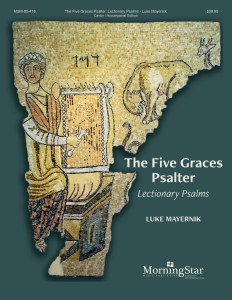
Luke Mayernik’s Five Graces Psalter is a collection of Responsorial Psalms for the entire three-year Lectionary cycle, and a welcome and worthy addition to the repertoire of Lectionary Psalms. The award-winning composer and organist has crafted memorable settings infused with harmonic freshness and melodic appeal—settings that bear the weight of the emotion and liturgical importance of the psalms.

When did you start composing?

Luke and Kassidy Mayernik

As a child, I started taking piano lessons around the age of 8.  In just a few short years, I was already re-arranging and discovering chord substitutions for all of the piano music Beryl Flemming (my piano teacher) would assign to me.  Every Wednesday evening I would to her house for my weekly lesson, excited to share my “improvements” of classical/contemporary staples – oh, she was quite furious and flustered by my musical changes, but I was never discouraged by her anger.  Beryl lived to be 105 years old, teaching many people over 80+ years to play the piano.  I will always be thankful for her guidance, support, and her patience (which was tested every week by yours truly!).

What do you know about composing now that you wish you had known earlier?

To be completely honest, what has been instilled in me during graduate school is the power of the rest and rhythmic gesture.  Before coming to, and ultimately graduating from, The San Francisco Conservatory of Music, much of my musical elements within any given composition began right on the downbeat, and often remained that way throughout!  A rest at the beginning of a phrase can provide so much movement, beauty, and clarity to phrases.  Like a great orator, a pause or breath in the right place can strengthen the composer’s rhetoric and support the overall musical narrative. When in doubt, put in a rest!

What first made you interested in setting the entire lectionary psalm cycle?

Two words:  Michel Guimont.  Michel’s sincere musical language profoundly impacted me as a young liturgical composer and musician; his gift of melody, harmony, and clarity truly shaped my own musical voice over the years. Published by GIA, Michel’s Lectionary Psalms is a significant and highly celebrated resource that I continually use as a guidepost, teacher, and spring of musical inspiration to this day.  At an early age, I knew that a comprehensive lectionary psalter was the one (and main) contribution I wanted to make as a liturgical composer.  Back in 2007, I started to pen the first few psalm settings at the age of 26. Michel came to West Virginia in 2009 to lead a workshop regarding the psalms, where I was in my second year of serving as Cathedral Organist at St. Joseph’s in the Diocese of Wheeling-Charleston.   Reviewing the few settings I had already completed (and are now included in the publication of The Five Graces Psalter), Michel genuinely encouraged my compositional efforts to continue; ten years later (and after many revisions and rewrites), The Five Graces Psalter was finished.

What is your method for writing a refrain melody?

It is extremely important to me to first understand what type of psalm it is (A Royal psalm, a lament, Song of Ascent, etc.) before I begin to musically set the text. Secondly, I speak the text aloud, memorizing the text in its entirety.  This method illumines the natural prosody of the psalm.  Then comes the actual musical crafting, which usually begins with improvised singing first.  The harmony is worked out at the piano in the final stages of musical crafting.

How do you know when something is “finished”?

Funny you should ask that!  There are actually two psalm refrain settings within The Five Graces Psalter that could have been set slightly differently, in my opinion.  The other day my wife and I sang these respective psalms as they are presented in The Five Graces Psalter, and with the changes.  When we voted, the results proffered an even tie!  Finished?  How I wrestle with these thoughts, even to this day.

Five Graces Psalter

What are the three most important things you want liturgical musicians to know about this volume of psalms?

1) The Five Graces Psalter has been specifically crafted to suit traditional and contemporary parish music programs, equally.
2) These settings can be used during the Liturgy of the Word, at the Communion Procession, and many of them include the Alleluia refrain option, which could make a nice Gospel Acclamation!
3) With accompaniments tailored for organ, piano, guitar, and instrumentalists, the memorable refrains and melodic psalm tones are designed to inspire and encourage a singing assembly!

What would you say to liturgical musicians who have never tried having a choir sing verses of a responsorial psalm?

First, have your choir speak each respective phrase of a verse, underlining the emphasized words of each phrase with a pencil. Then, have your choral ensemble chant that verse together in unison with a natural speech pattern; you may even want to do this by part or section as well, either in unison or in parts.  Pretty soon, your choir will be excited to sing the harmonies of these psalm tones week after week!

Click here to learn more about The Five Graces Psalter.

Convention Review: NPM Sponsorship Sessions & Events

The 2017 National Association of Pastoral Musicians (NPM) Convention was a busy and successful event for MorningStar Music. It was great to meet new colleagues and to see familiar faces! For a review of sessions led by President Mark Lawson and Editor Kelly Dobbs-Mickus, along with the corresponding repertoire featured at each session, check out the list below. Click the links for handouts and more information about featured works performed and highlighted at the convention, including PDF and audio samples.

Showcases

Accessible Music for Parish Choirs with MorningStar Music
Kelly Dobbs-Mickus; Accompanist Preston Dibble
Music for use with modest resources. Quality selections in a variety of styles, voicing, and instrumentation that cover the church year.
Click here for a list of music featured at this reading session.

New Choral Music from MorningStar
Kelly Dobbs-Mickus; Accompanist Preston Dibble
MorningStar presented quality music for the church year in a variety of styles, voicings, and instrumentation.
Click here for a list of music featured at this reading session.

Music for Advanced Choirs with ECS Publishing Group
Mark Lawson; Accompanist Jennifer Pascual
Music for the intermediate to advanced choir from this leading publisher of classical repertoire.
Click here for a list of music featured at this reading session.

The Five Graces Psalter by Luke Mayernik: A Unique New Resource for Lectionary Psalms
Luke Mayernik, Kelly Dobbs-Mickus, Joe Simmons, Kassidy Mayernik
Participants sang through several psalms, heard from Luke about his composing work, and learned about the new publishing approach.
Click here to learn about The Five Graces Psalter.
Click here for the session handout.

Breakout Sessions

Jack of All Trades vs. King of Instruments, Part 1 & 2
Kelly Dobbs-Mickus
A two-part session for beginning and intermediate organists with a focus on repertoire for manuals and minimal pedal as a tool for developing skills for more effective playing, from hymns and service music to organ solo pieces.
Click here for the session handout.

Christ Will Be Your Way, Your Truth, Your Life
Lynn Trapp
Repertoire for the Sacraments and Rites of Initiation: Baptism, Eucharist, and Confirmation.
Click here for a list of music featured at this session.

Choral Classics Every Choir Should Know
Mark Lawson and Panel
Panelists Tony DiCello, Jennifer Pascual, Rick Gibala, and Preston Dibble—moderated by Mark Lawson—discussed sacred choral staples, including what makes a classic a classic, what pieces they return to year after year and why, and what choirs can learn from classics.
Click here for a list of music featured at this session.
Click here for the session handout.

Evening Concert

University of Notre Dame Children’s Choir, Mark Doerries, Conductor

Notre Dame Children’s Choir
Conducted by Mark Doerries
Mark and the Notre Dame Children’s Choir (who participated all week in the Children’s Choir Director Institute) performed an ecumenical program highlighted by a participatory Vespers service for congregation, choir, cantor, and jazz trio.
Click here for information about our University of Notre Dame Children’s Choir Series.

New Lectionary Psalms Volume

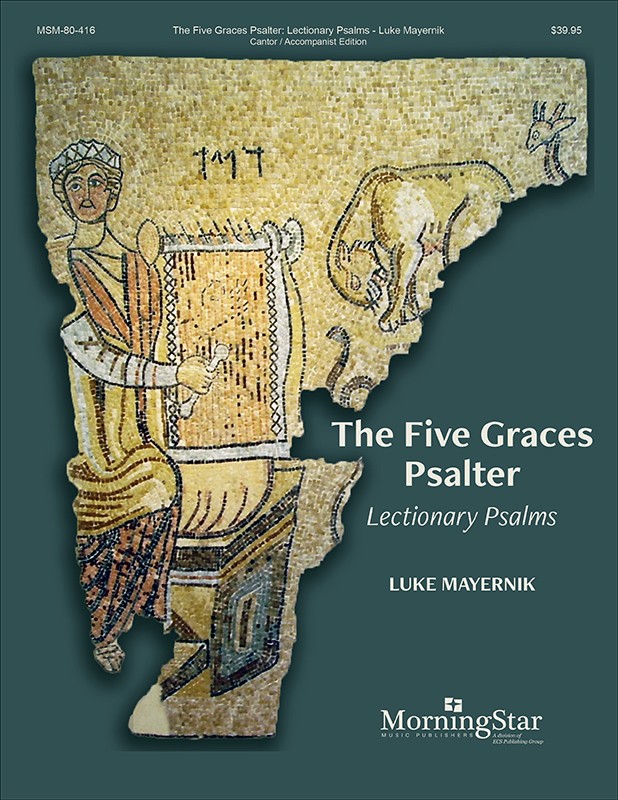
The Five Graces Psalter: Lectionary Psalms by Luke Mayernik
This complete set of Responsorial Psalms for the 3-year Lectionary cycle from award-winning composer Luke Mayernik is an essential new resource for both traditional and contemporary parish music programs. The settings are memorable, infused with harmonic freshness and melodic appeal. The Psalm tones are crafted for SATB choir as well as cantors. Separate choral editions are available in print and download versions. Vocal or instrumental descants enhance many refrains. Effective accompaniments for piano or organ, with optional guitar. Available in both print and download editions.
80-416, $39.95
New!
Click here for more information about this work.

Opening hymn at Thursday’s Eucharist

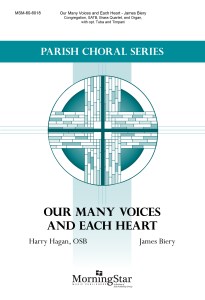
Our Many Voices and Each Heart by James Biery
Scored for SATB, Assembly, Brass Quartet, Organ with opt. Timpani
This hymn setting was commissioned for Thursday’s Convention Eucharist and features a new text by Fr. Harry Hagan, OSB. James Biery’s creative arrangement of the well-loved tune KINGSFOLD for assembly, choir, organ, brass and timpani was perfect for this “big” liturgy, but it is also suitable for “smaller” situations.
60-6018, $1.95
New!
Click here for more information about this work.


A Dog’s Life — Daron Hagen’s film score commission

The Wintergreen Music Festival commissioned Daron Hagen to compose a new sixty-minute orchestral score for the silent Charlie Chaplin classic film, A Dog’s Life. The world premiere, scheduled for July 28, 2017, will be conducted by Festival Artistic Director Erin Freeman.

Charlie Chaplin and the dog

A Dog’s Life (1918) is an American short silent film, starring writer and producer Charlie Chaplin. The film features Scraps, a dog, as Chaplin’s co-star and hero.

This year marks Daron Hagen‘s third season as Chair of the Wintergreen Music Academy Composition Program. As part of this project, twelve composers spend two weeks on Wintergreen Mountain, composing and working directly with Hagen and composer faculty member, Gilda Lyons.

During Hagen’s term as Chair, he composed another score for the Charlie Chaplin film The Tramp. The twelve composers participating in the two-week retreat will create a new score to The Vagabond. 

Source: A Dog’s Life — Daron Hagen

Design a site like this with WordPress.com
Get started