World Premiere at Wintergreen Music Festival — Daron Hagen

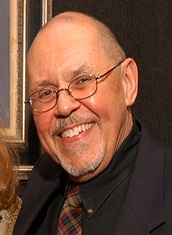
Wintergreen Summer Music Academy faculty members violoncellist Sarah Kapps and pianist Peter Marshall will give the world premiere Daron Hagen‘s Sonata for Cello and Piano as part of the 2017 Wintergreen Music Festival. The performance is scheduled for July 27, 2017.

To learn more about the concert, click here.

Sarah Krapps

Cellist Sarah Kapps has an active and diverse musical background that has taken her across much of the globe as soloist, chamber musician, orchestral member, and rock star. As a performer, she is a sought after and respected chamber musician, often being called on to perform new works.  She regularly appears with Atlanta’s avant garde ensemble, Bent Frequency, Paramount Chamber Players, Music on the Hill, as well as countless self-produced chamber and solo concerts.  Her first concert of 2015 was a self-conducted concerto performance from the solo seat.  In the summers, she has been a long-time member of the Wintergreen Festival Orchestra, Chamber Players, and Academy faculty.  She was a founding member of the Red River and Denali String Quartets, and later came to serve on the faculty at The University of Texas Pan-American. Sarah Kapps holds degrees from The Manhattan School of Music and The Mannes College of Music, and has studied with Paul Tobias and Peter Wiley of the Guarneri Quartet. She lives in Atlanta with her husband, pianist Peter Marshall.

Peter Marshall

Known throughout the Southeast for his astonishing versatility and expressiveness at the keyboard, Peter Marshall performs on piano, harpsichord, and organ. He has appeared as a soloist with major orchestras in Atlanta, Washington, D. C. (National Symphony), Richmond, Norfolk (Virginia Symphony), Buffalo, Columbus (OH), and Charlotte, and has given solo recitals in the United States and abroad. Marshall holds the Hugh and Jessie Hodgson Keyboard Chair at the Atlanta Symphony Orchestra, and performs numerous concerts with the ASO throughout the year. Active as an accompanist and coach in Atlanta since 1993, he is in frequent demand as a keyboardist in vocal and instrumental recitals and in chamber music. He has appeared with the cutting-edge contemporary ensembles Bent Frequency and Sonic Generator; with the Southeastern Festival of Song; at the Wintergreen Summer Music Festival; and with the period instrument ensembles Hesperus, Folger Consort, Atlanta Baroque Orchestra, and Grande Bande Baroque Orchestra. Marshall joined the faculty of the Georgia State University School of Music in 2001. He holds degrees from Oberlin College and Yale University and studied at the Musikhochschule Lübeck as a Fulbright Scholar.
Apple Hill String Quartet performs Kareem Roustom

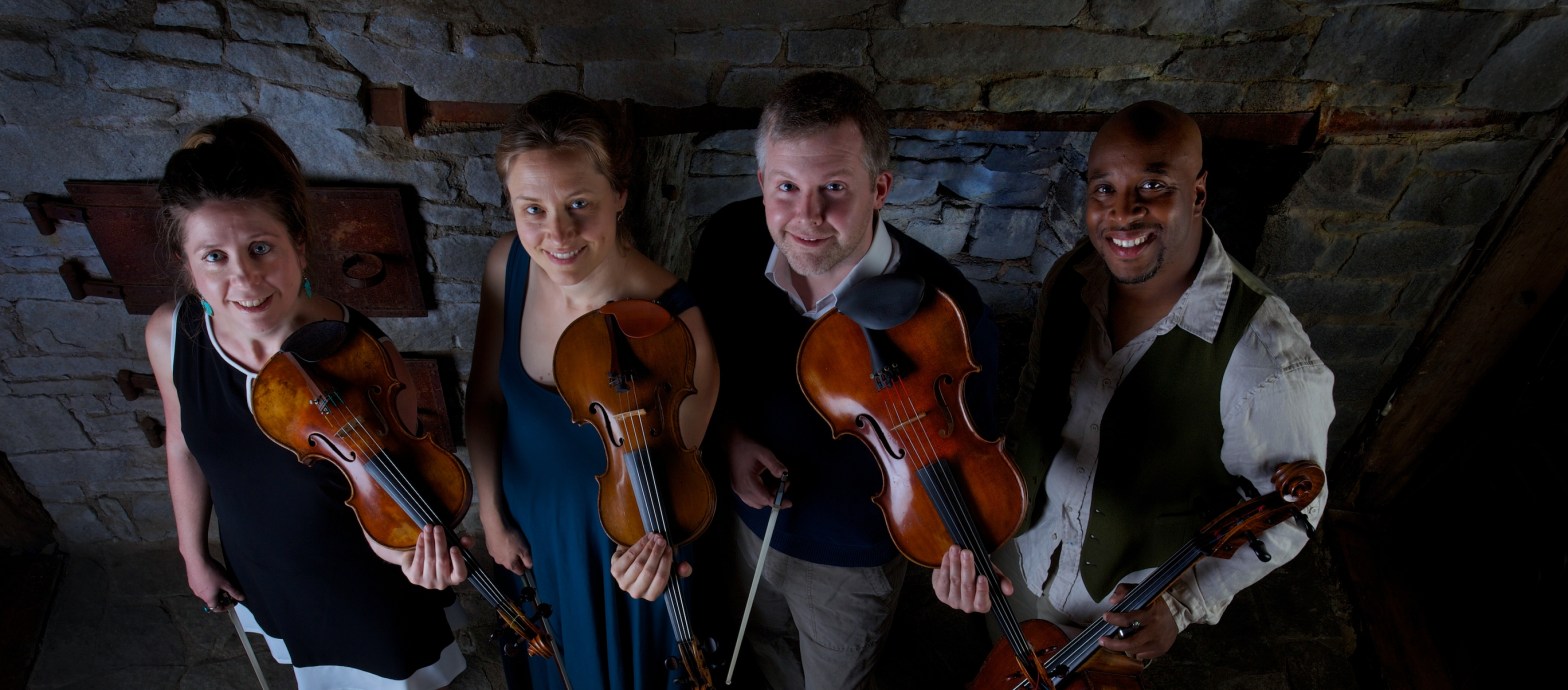
The Apple Hill Center for Chamber Music celebrates their 47th year with a Gala Fundraiser concert on July 25, 2017, featuring a performance of Traces by Kareem Roustom. The work, originally co-commissioned in 2013 by the Apple Hill Center, will be performed by the Apple Hill String Quartet, Kinan Azmeh (clarinet), and Sally Pinkas (piano).

The Apple Hill String Quartet commits their performance to that of new works. Since its founding in 20007, the ensemble has earned worldwide praise for its concerts of both traditional repertoire and newly commissioned music. The Apple Hill String Quartet has devoted themselves to educational outreach, including their Playing for Peace outreach program focusing on social change and conflict resolution through music.

About Traces, as written by Kareem Roustom

“Since the beginning of the popular uprising in Syria and the subsequent government crackdown, which was the catalyst for the current civil there, all of my concert music works have reflected on that situation. Traces, which is the largest work in this series, is a meditation on loss: both the loss of people and infrastructure as well the loss of a sense of place and connection that one has with a place. On the formal level, Traces takes its title and inspiration from a genre of pre-Islamic poetry that often begins with the poet and his companions returning to a desert campsite where his beloved lives only to find that the camp has been broken and all its inhabitants have moved to another site that is unknown to the poet. All that is left behind are al-atlaal or traces, of the site’s former inhabitants. Arguably, the most famous of this genre of poetry is Al-Mua’llaqa by Imru’ al-Qyas (d. 542 A.D.). The opening lines that most reflect the spirit of Traces are below:

Halt, my two friends. Let us weep, recalling a beloved and an abode by the edge of the twisted sands…
The encampment traces have not yet been effaced for all the weaving by the winds from the north and south…
There my companions halted their beasts awhile over me, saying, “Don’t die of grief; show some restraint!”
Yet the cure for my sorrow is indeed an outpouring of tears. But is there, among disappearing remains, a prop for me?
Traces
Traces LMP021

One of the basic melodic themes of Traces is based on an old nationalistic song that was often broadcast on television during my childhood in Damascus. The song, called Oh Syria my beloved (Suriya ya habibati) is in a maqam, or scale, called Kurd and begins with a melodic line that descends by whole steps and then cadences to the lower tonic with a triplet figure. This song, and the very nationalistic video that accompanied it, was an annoyance to my siblings and me because it often delayed our after-school cartoon programs. Because of its constant re-airing, it carved out an indelible part of my auditory memory; but its nationalistic overtones were never ones that I connected with, and for many years its memory was buried in my subconscious. However, after civilian deaths began mounting in Syria, I came across a reinterpretation of this song, made by a Syrian percussionist based in Europe, that was scored for clarinet and marimba. This re-imagined version of this song was full of grief and sadness, and it took on a whole new meaning. Like the poem of Imru’ al-Qays, it became a meditation on loss as I watched the place I once called home, and my memory of it, disintegrate, leaving behind only traces of what once was.” – Kareem Roustom


Learn more about the summer concert series here: Apple Hill Concerts

Robert Kyr – Composer-in-residence at Walden School

Robert Kyr
Robert Kyr

The Walden School Young Musicians Program’s composer-in-residence Robert Kyr, the chair of the composition department at the University of Oregon, will be joining the school for a discussion of his work on Sunday, July 30th, in the Fountain Arts Building on the campus of The Dublin School.

The Walden School, founded in 1972, is an acclaimed summer music school and festival offering programs that emphasize creative application, specifically through the study of musicianship, improvisation, and composition. In residence on the beautiful campus of the Dublin School in Dublin, New Hampshire, the school provides an inspiring retreat-like environment ideal for creative music making. The School’s programs include the Young Musicians Program for students ages 9 to 18, the Teacher Training Institute for music educators, and the Creative Musicians Retreat for adults.

Robert Kyr, has composed twelve symphonies, three chamber symphonies, three violin concerti, and numerous works for vocal ensemble of all types, both unaccompanied and accompanied, including many large-scale works for which he wrote or co-wrote the text, including: A Time for Life (an environmental oratorio, 2007); The Passion according to Four Evangelists (1995); and three choral symphonies—From Creation Unfolding (No. 8, 1998), The Spirit of Time (No. 9, 2000), and Ah Nagasaki: Ashes into Light (No. 10, 2005). Many of his works are inspired by the problems of war and peace – for example, he envisioned and implemented ‘Waging Peace through Singing’ (2000-02), a global initiative that encouraged the creation and dissemination of an international repertoire of choral music composed on peace-related texts. Kyr holds a BA from Yale University, an MA from The University of Pennsylvania, an a PhD from Harvard University, and has held teaching positions in composition and theory at Yale University, UCLA, Hartt School of Music, and Justus-Liebig-Universität Giessen, Aspen Music School, and the Longy School of Music in Cambridge, Massachusetts.

Source: Presentation by Robert Kyr, composer-in-residence

James Eakin joins faculty of Centenary College of Louisiana

Dr. James Eakin has joined the faculty of the Centenary College of Louisiana Hurley School of Music as professor of theory and composition.

Hurley School of Music

Eakin has been a composer-in-residence with the Turtle Creek Chorale, Resounding Harmony, and The San Francisco Gay Men’s Chorus.  His compositions have been performed at Carnegie Hall, Davies Symphony Hall in San Francisco, and the Meyerson Symphony Center in Dallas, Texas. He has recently scored such films as Cut to the ChaseSugar, and Visible Scars.  His composition #twitterlieder, performed by the Virginia Chorale, is currently in production for a PBS documentary.

James Eakin
James Granville Eakin III

Eakin received his Bachelor of Music from Centenary College in 2000, his Master of Music from Southern Methodist University and his Doctor of Musical Arts in Composition from the Conservatory of Music, University of Missouri-Kansas City. A well-known choral composer, Eakin studied at the Aspen Music Festival and School’s Center for Composition Studies before becoming the Electronic Music Studio Coordinator and eventually the Director of the Film Scoring Program there in 2008.

Source: Centenary announces two new faculty members at Hurley School of Music | Centenary College of Louisiana

Little Patuxent Opera Institute Performs Too Many Sopranos

The Little Patuxent Opera Institute (LPOI) offers training for moderately advanced young operatic voices in a warm and nurturing collegiate environment. To succeed in the professional opera field, aspiring singers must master many skills. The program is designed to introduce participants to and enhance the development of their skills, while providing valuable, meaningful performance opportunities and experience.

Students receive group and private instruction on the various elements of operatic performance and classical vocal arts, including character development, technique, stage movement and blocking, and a broad spectrum of classes related to professional development and health. In addition, participants learn from and study under a number of highly respected local, regional, and internationally recognized artists.
TOo Many Sopranos

Too Many Sopranos

Composed by Edwin Penhorwood, Libretto by Miki Lynn

Four Divas arrive in heaven to learn there is not enough room for all of them in the Heavenly Chorus. Because too many tenors and basses are in Hell, only one of the sopranos will be allowed into the chorus. The sopranos are appalled that they must audition, but submit. After their impressive auditions, St. Peter cannot make a decision. Gabriel therefore mentions the Redemption Clause: If the sopranos go to Hell and do a selfless deed, they can bring back to Heaven as many tenors and basses as needed. To protect them in Hell, St. Peter grants them a special disguise.

The Divas, St. Peter, and Gabriel arrive in Hell and listen to the stories of some of the tortured souls there. Just Jeanette meets Nelson Deadly and they fall in love. The Sandman arrives with the stage director, Orson and presents a task to the couple: If they don’t fall asleep listening to Orson, they can take back to Heaven as many tenors and basses as they want. They fail the test, but because of a selfless act on their part, they are granted the release of the men. There is general rejoicing and all promise St. Peter they will never sing opera again.

For more information about the opera, click here.

Source: Little Patuxent Opera Institute | Howard Community College

Being Frank: On Composing “Shining Brow” by Daron Hagen

Daron Hagen and Paul Muldoon
Daron Hagen (Left) & Paul Muldoon (Right)

“Can a man be a faithful husband and father and still be true to his Art?”

The year 2017 marks the 150th anniversary of Frank Lloyd Wright’s birthday. As organizations across the country celebrate the birth of this great American architect, E. C. Schirmer turns to the opera Shining Brow, composed by Daron Hagen with libretto by Paul Muldoon.

Shining Brow centers around the 11 tumultuous years (1903-1914) in the young career of American architect, Frank Lloyd Wright. The episodes include the Cliff Dwellers Club in Chicago with Louis Sullivan (Wright’s former mentor), a construction site in Oak Park, Illinois, Berlin, Germany, and finally Taliesin (Wright’s estate in Wisconsin) where many of the most tragic events of Wright’s life are played out. This opera in two acts was commissioned by the Madison Opera, a division of the Madison Civic Music Association. The composer was officially authorized by the Frank Lloyd Wright Foundation and the Taliesin Fellowship to compose the opera and to have it published.

Daron Hagen is an avid contributor to Huffington Post. In this article, Hagen details the history behind the composition of his very first opera. Hagen and Muldoon took to the task of exploring Frank Lloyd Wright’s relationship with Mamah Cheney, along with the “intersection of Life and Art, self-actuation and selfishness.” The Madison Opera premiered the work in April 1993.

Read the article in its entirety here: Being Frank: On Composing “Shining Brow” | HuffPost

Scott Gendel – finalist in 3rd ORTUS International New Music Competition 

E. C. Schirmer composer Scott Gendel was named one of 16 finalists in the 3rd annual ORTUS International New Music Competition. The pool of over 600 submissions from across the globe were reviewed by members of Khorikos (NYC). Scott Gendel’s submissions was additionally selected as one of ten pieces to be performed by the Khorikos ensemble on September 23, 2017.

KHORIKOS is one of New York City’s most distinguished a cappella ensembles, performing a wide range of musical works from medieval polyphony to contemporary sound sculpture.  We are taking the lead in re-inventing classical music by engaging in unique collaborations with artists of other genres, including film and dance, and by performing in traditional and non-traditional venues. KHORIKOS performances have been described as other-worldly, powerful and cutting-edge.  A fresh take on an age-old art form, KHORIKOS is an experience, not just an ensemble.

Jesse Mark Pechham, Artistic Director
Alec Galambos, Principal Conductor

Scott Gendel (b. 1977) is a freelance composer and arranger, as well as a vocal coach and accompanist for singers and opera companies. Recently, he recorded his piece “At Last” with soprano Camille Zamora and cellist Yo-Yo Ma, as part of “An AIDS Quilt Songbook: Sing For Hope,” a recording released on Naxos Records and GPR, benefiting amFAR, the American Foundation for AIDS Research. In 2006, Scott won first prize in the ASCAP / Lotte Lehmann Foundation Song Cycle Competition. That award led to a large song cycle commission from ASCAP and the Lehmann Foundation, performance of that commissioned work in three major American cities by the Joy in Singing Foundation, and publication of the work by ECS. Scott is now emerging as a composer on the national and international scene.

Click here to learn more about Scott Gendel and his music. 

Source: The Winners of the 3rd ORTUS International New Music Competition | khorikos

Britten-Pears Foundation hosts concert including music of Earnest & Wadsworth

In a recital celebrating the strength –  and inherent romance –  represented by Britten and Pears when they premiered Seven Sonnets of Michelangelo, Justin Vickers (tenor) and pianists Karyl Carlson and Felipe Rodrigues-Silva performed two works by E. C. Schirmer composers Zachary Wadsworth and John David Earnest. Zachary Wadsworth’s Secret Songs was commissioned and premiered in this concert to mark the 50th anniversary of the decriminalisation of homosexuality in the United Kingdom. John David Earnest’s Songs of Hadrian, a song cycle based on five texts by Arch Brown about Roman Emperor Hadrian’s love for the beautiful Greek youth, Antinous.

June 8, 2017, England.

Zachary Wadsworth
Zachary Wadsworth
John David Earnest
John David Earnest


Source: Britten-Pears Foundation

Schmopera interview with Juliana Hall

“Despite its difficulties, there is nothing I can imagine I would rather be doing with my life than composing art songs…it is my world, and it is where I belong.” – Juliana Hall

Known for its honest and fresh look a the opera scene, Schmopera is the first place for opera fans across the globe to check for the latest opera news. As part of their composer interview series, editor Jenna Douglas sat down with Juliana Hall to explore her music and life as an art song composer.

Jenna Douglas
Jenna Douglas, Schmopera editor & co-creator

To read the full interview, click here: Talking with composers: Juliana Hall

New Chamber Opera from beloved American Composer, Gwyneth Walker: Evangeline

E. C. Schirmer is pleased to welcome a new addition to our opera catalog. Evangline is a chamber opera based on Henry Wadsworth Longfellow’s poem of the same name, scored for soloists, piano, violin, and narrator. A tragic story based on historical and real events, this opera is an accessible addition to any catalog.

Evangeline tells the story of the expulsion of the Acadian people from Nova Scotia from 1755-64. Forced into exile by the British, the Acadians were separated from one another, traveling the United States and abroad searching for loved ones. Longfellow wrote his poem in 1847, focusing on the plight of young Acadian woman Evangeline. She is betrothed to her childhood sweetheart, Gabriel. However, before they have a chance to marry, British soldiers force residents of her town to leave, causing their separation. The opera follows Evangeline as she searches for Gabriel.

Evangeline scene

Widely performed throughout the country, the music of American composer Gwyneth Walker is beloved by performers and audiences alike for its energy, beauty, reverence, drama, and humor. Dr. Gwyneth Walker (b. 1947) is a graduate of Brown University and the Hartt School of Music. She holds B.A., M.M. and D.M.A. degrees in Music Composition. A former faculty member of the Oberlin College Conservatory, she resigned from academic employment in 1982 to pursue a career as a full-time composer. For nearly 30 years, she lived on a dairy farm in Braintree, Vermont. She now divides her time between her childhood hometown of New Canaan, Connecticut and the musical communities of Sarasota, Florida and Randolph, Vermont. Walker’s catalog includes over 300 commissioned works for orchestra, chamber ensembles, chorus, and solo voice. A special interest has been dramatic works that combine music with readings, acting, and movement. The choral and vocal music of Gwyneth Walker is published by E. C. Schirmer.

At a Glance:
Chamber opera for soprano, alto, tenor, baritone, and narrator
Instrumentation: piano and violin (fiddle)
Duration: 50 – 60 minutes

Evangeline
For more information about Evangeline, click here.


Picture Credits: Performance at historic Covenanter Church, Grand Pre, Nova Scotia, Canada


Reviews:

Evangeline Premiere Sells Out: Review by Kings County Advertiser

Opera Comes to the Space Coast as Holy Trinity Episcopal Academy Presents “Evangline”: Press Release from Holy Trinity Episcopal Academy

Design a site like this with WordPress.com
Get started