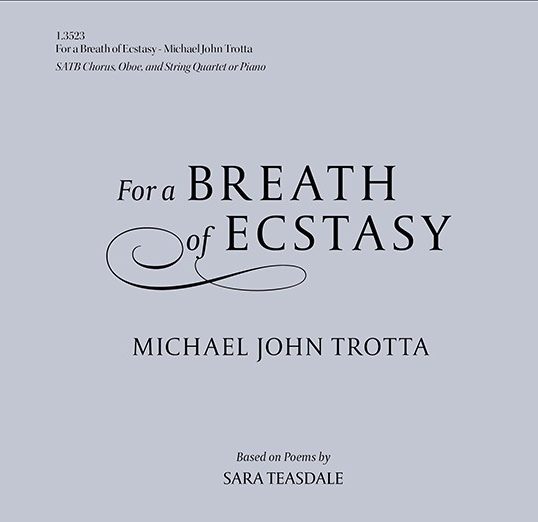
Michael John Trotta’sFor a Breath of Ecstasy was just recorded by the Northwestern State University Chamber Choir, under the direction of Nicholaus B. Cummins. The recording recently received a review in Gramophone by Donald Rosenberg:
The American composer Michael John Trotta has concentrated on choral music for most of his career. The newest disc devoted to his works offers both secular and sacred fare. Its title, ‘For a Breath of Ecstasy,’ is a line from one of the seven Sara Teasdale poems Trotta has set for choir, oboe and string quartet. The poems come from an extensive Teasdale collection, Love Songs, that won her the first Pulitzer Prize in Poetry in 1918.
The poems in Trotta’s cycle, commissioned to mark the Teasdale-Pulitzer centennial, are reflections by a woman grateful for the affection she has received. The lyrical verses prompted the composer to summon equally lyrical musical responses, with appealing melodic lines, tender harmonies and a palette of glowing vocal and instrumental colors.
Trotta binds the cycle together with a beguiling theme, first played by the oboe, that leads to all manner of lovely choral lines. The ‘ecstasy’ soars in the fifth song, ‘Spend all you have on loveliness’, a poignant and apt thought, especially for a poet who was called ‘first, last and always a singer’ in an early review of Love Songs. The disc is rounded out by three sacred pieces for unaccompanied choir that show Trotta in his rapturous element, whether the texts are English or Latin.
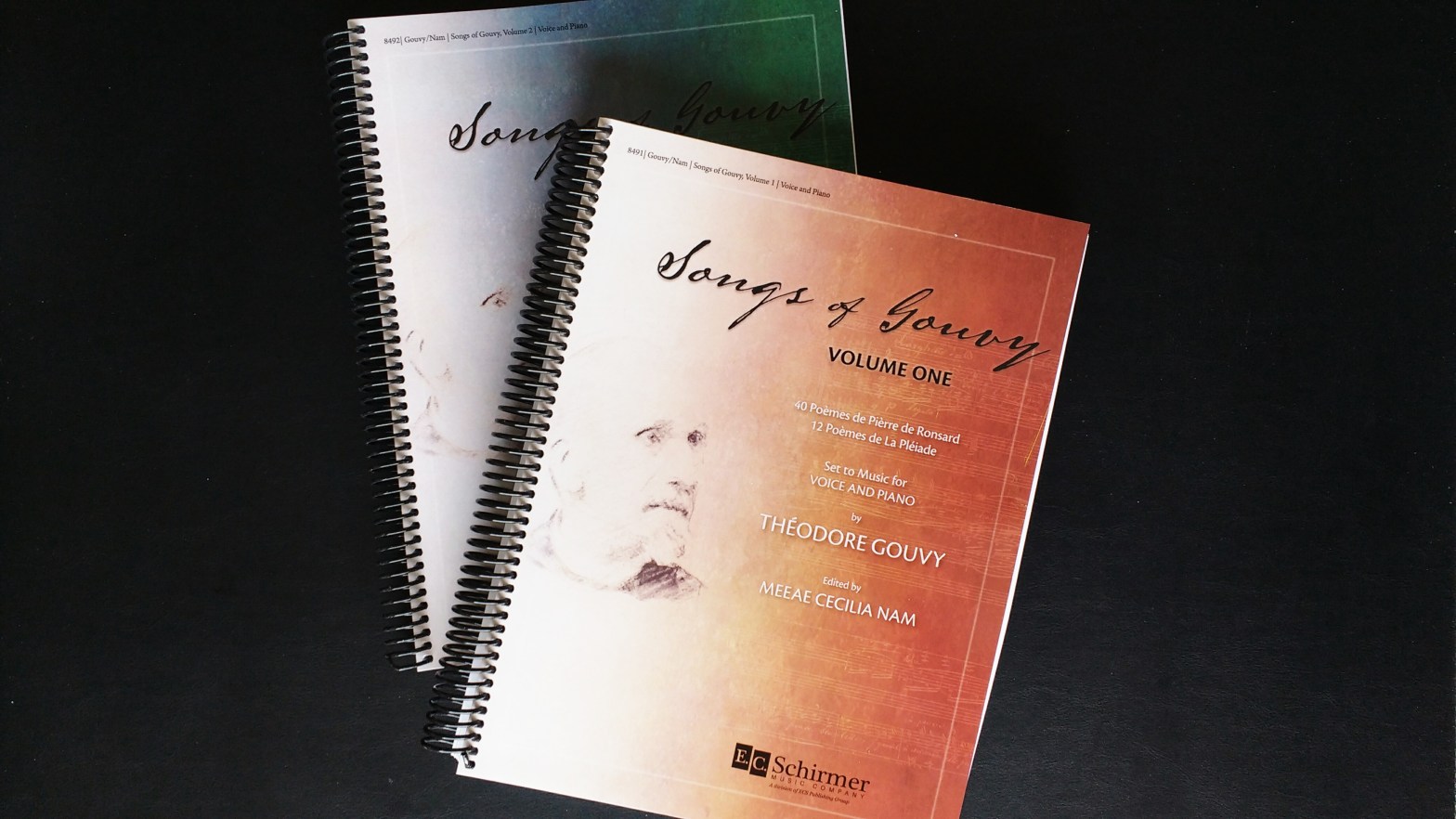
Explorers of French mélodie have an interesting journey ahead. Have you heard of the songs of Théodore Gouvy? Neither had I, but thanks to the research and study of Dr. MeeAe Cecilia Nam, there are eighty-eight songs by this nineteenth-century composer now available for perusal and performance. E. C. Schirmer Music Company has recently released a two-volume critical edition titled Songs of Gouvy, containing the song catalog of composer Louis Théodore Gouvy (1819-1898), edited by Dr. Nam, Professor of Voice at Eastern Michigan University, who has devoted the last number of years to Gouvy’s song output. These publications are the fruits of that labor.
This sizeable collection of 88 French songs has been virtually unknown and forgotten until recently. In order to preserve Gouvy’s legacy and perpetuate research and performance of his music, L’Institut de Théodore Gouvy was founded in 1995 in Hombourg-Haut, France and began to lure scholars and performers to work with and perform his music in concerts. A small number of CDs have been produced, and little by little, Gouvy’s name is surfacing as more than a petit maître.
Gouvy was a prolific composer; his catalog includes more than 200 compositions, including works for large orchestra (including 8 symphonies), a huge repertoire of chamber music, large vocal religious works, two operas, and over 100 songs.
His catalog of compositions has been slow to surface, quite possibly due to his birthplace in Alsace, which at the time straddled two countries and cultures, Germany and France. In 1815 the border between France and Germany fluctuated, and Gouvy was the only family member designated as German instead of French. He was denied French citizenship until he was thirty-two.
Louis Théodore Gouvy (1819-1898) was born into a wealthy French industrial family. He studied law in Paris, but gave it up to pursue a career in music. Always drawn to music, art, and languages, he began to compose, working privately with teachers at the Paris Conservatoire, since the circumstances of his birth precluded admitting him to study there. His compositions drew inspiration from both German and French cultures.
Gouvy produced a sizeable listing of symphonies, chamber music, and other instrumental forms, waiting until the mid-century mark to really concentrate on composing songs. He led a diverse cultural life, interacting with contemporaries who admired his work and whom Gouvy knew well: Liszt, Brahms, Schumann, Mendelssohn, Berlioz, and Gounod among others. Though he knew and was admired by many fellow composers, his career never really took off as he’d hoped, and his musical legacy remained largely obscure as well. At his death in 1898, his music was largely forgotten. Today his name is slowly being revived.
It is not surprising that Gouvy’s love for art, and languages manifested itself in his composing a large body of French song, and that he chose poetry almost exclusively from sixteenth-century French poet Pierre de Ronsard, and the group of his compatriots known as the Pléiade poets. Gouvy was a lover of nature and as such, would naturally be drawn to the poems of Ronsard and this group. Gouvy only deviated from Ronsard and the Pléiades to set the verses of his good friend, poet Moritz Hartmann (1821-1872), whom he met around 1845. Hartmann’s verses tend toward the political, championing the freedom of the individual. The French poet, Adolph Larmande, translated eighteen of Hartmann’s poems from German to French and when these songs were published, they were published in both languages. His cultural duality was very much a part of Gouvy’s compositional persona even then.
Gouvy’s settings of Hartmann appear in Larmande’s French translation in volume 2. The songs that make up Opus 21 and Opus 26 are Gouvy’s settings of Hartmann’s poetry and are designated for baritone and tenor, respectively.
E. C. Schirmer’s two anthologies are handsomely designed and sturdily packaged. Each large volume is spiral-bound for ease in handling and performing. In addition to the musical scores, both volumes contain complete texts and translations, with critical notes on the texts. The original texts in sixteenth-century French spellings—and in the case of Hartmann’s poems, the poems in their original German—are given as well. All the texts in the musical score appear in modern French used today.
Songs of Gouvy
Finally, both volumes end with an extensive article dealing with French versification written by Catherine Bessone, Professor of French Language and Literature. For singers, collaborative pianists, teachers, and any other musicians who want to understand more about the French texts with which they’re working, it is full of information. Some may find it most useful to start by looking up the French poetic forms and using those as guides for exploring the complexities of sixteenth-century French verse.
Although the two volumes contain works for voice and piano, there are several instances of additional performance combinations: “Avril,” Rémy Belleau’s paean to nature’s bountiful gifts is set as a duet; and “A Cassandre, ” perhaps Ronsard’s best-known ode (“Mignonne, allons voir si la rose”) features a cello obbligato, as does another of the poet’s most celebrated verses, “A sa maîtresse,” which contains a favorite sixteenth century poetic theme—carpe diem—an exhortation to seize and enjoy the moment since youth and love are fleeting. As Ronsard spins his web of seduction, the cello echoes its own tempting subtext.
Gouvy produced his large body of songs in the compressed time of several years; they were not well known in his life time, and they remain so today, yet here is a composer who had an extraordinary warmth of feeling for the human voice and produced not only songs, but larger vocal works and two operas as well. In the notes that accompany her CD of Gouvy songs, MeeAe Cecilia Nam writes that the songs have both a French and German character, which might well have caused some confusion in classifying them as French mélodies or German Lieder. We might conclude that his songs were too German for the French, and too French for the Germans.
Gouvy’s musical style has been likened to Mendelssohn or Gounod. It may be that like Gounod, Gouvy intended his songs for the consumption of the bourgeoisie, interested in in taking French song into their parlors along with Schubert’s Lieder. Gouvy’s beautifully crafted songs helped establish that French song could blend lovely melodies, expressive accompaniments, and fine poetry with the same results as the German composers did with Lieder. There is a fluid lyricism in the piano accompaniments, and an adherence to classical French style, which combines lyricism and precision. The songs are notable for their French sense of proportion—graceful and well crafted. Gouvy was himself a pianist, and in his songs, the piano writing often collaborates with the voice, most especially in creating the emotional mood and overall poetic atmosphere.
Rather than languishing in obscurity, these songs definitely deserve careful consideration as both teaching and performing material. We applaud Dr. Nam’s passion and research for bringing them to light so that teachers and singers may give them careful examination. They have their own unique voice that deserves to be heard, full of melodious vocal phrases rather than subtle details, underpinned with undulating accompaniments encased in colorful rhythmic figures which sustain overall emotional mood. They are inventive, engaging, quite approachable musically, and pose few vocal difficulties. They deserve a place in the body of standard French song repertoire.
We are fortunate to live in a time in which the rediscovery of musical treasures long forgotten is more possible than it has ever been. Many thanks to Dr. MeeAe Cecilia Nam for her dedicated efforts in bringing this fascinating and substantial catalog of songs to light. In doing so, she has further enriched the art song catalog for singers, scholars, and the many artists for whom discovering new repertoire is always an important part of the vocal experience. Chapeau!
Dr. Carol Kimball is Emerita Professor of Voice, and Barrick Distinguished Scholar at the University of Nevada, Las Vegas. She is the author of Song: A Guide to Art Song Style and Literature; Art Song: Linking Poetry and Music
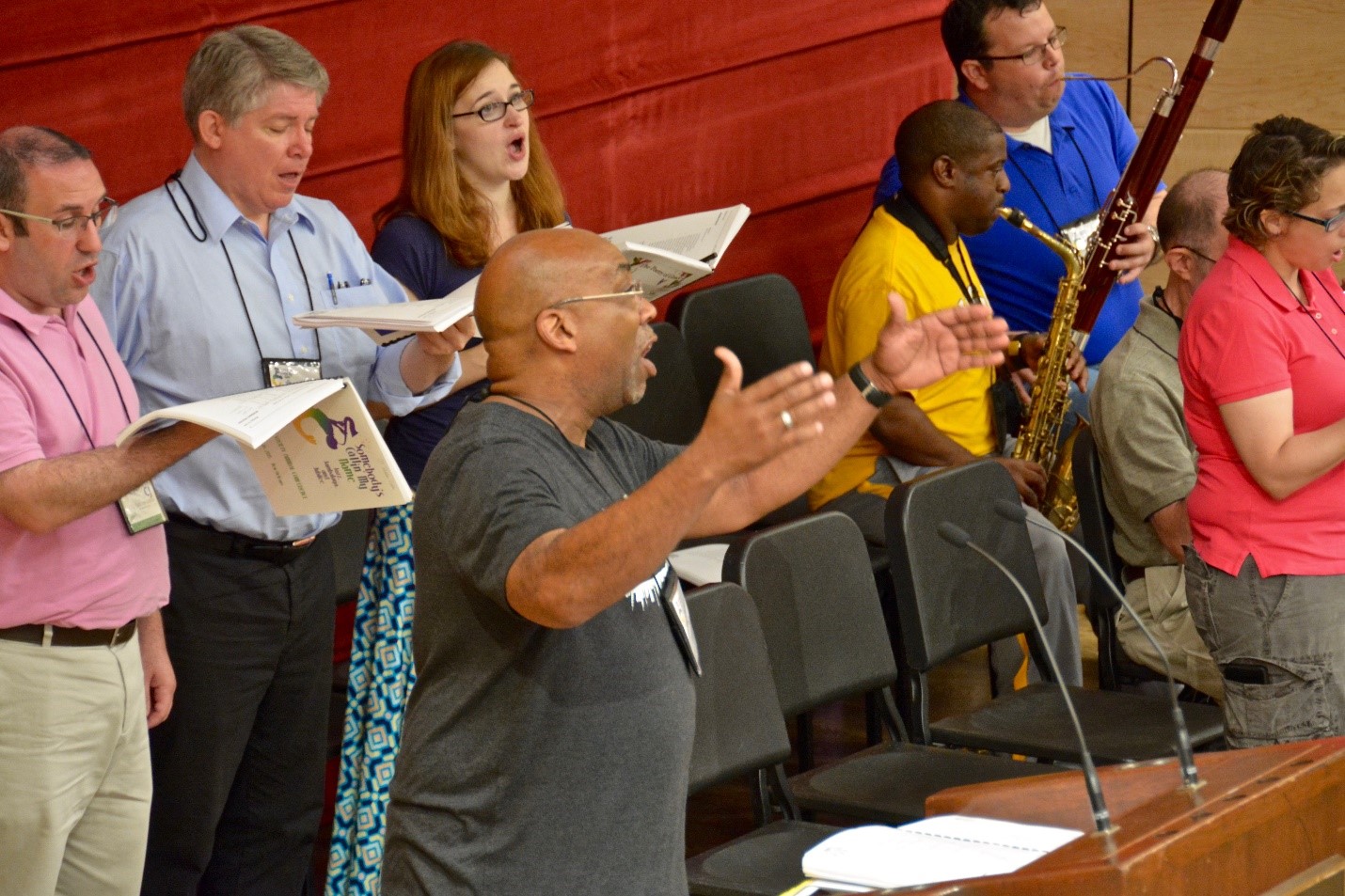
Each July hymnologists, pastors, church musicians, composers, poets, and people who just love singing together come together at The Hymn Society’s Annual Conference. This year we will meet in St. Louis at Washington University to celebrate the intersection between the public square and the church’s song. How do those two intersect and interact? How can song function not only within the walls of the church but out in the world? And what better place to explore that topic than in St. Louis, which has been in many ways the focal point of protests and conflict over the last decade here in the United States?
Diverse Leadership
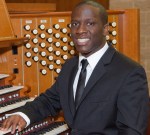
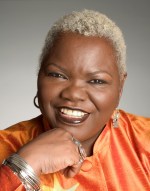
We believe that the holy act of singing together shapes faith, heals brokenness, transforms lives, and renews peace. Because of that, we are committed to including diversity in our leadership. Our conference leaders this year come from a wide variety of backgrounds, races, and genres/styles. The opening hymn festival will be led by one of the nation’s most talented young organists, Nathaniel Gumbs, who will lead us in some of the great hymns of the faith interweaving with the voice of the organ. The next day, we will be lead in both plenary and hymn festival by former member of Sweet Honey on the Rock and aural/oral song-leading expert Ysaye Barnwell. The following day will include a plenary by Cuban hymnologist Amos Lopez followed by an evening hymn festival of Roman Catholic hymnody at the beautiful Cathedral Basilica. Wednesday will feature David Bailey and Urban Doxology, whose ministry is based in Richmond, Virginia, and focused on bringing reconciliation to their community through worship and relationship-building. Finally, our Thursday closing festival will feature local St. Louis musician Paul Vasile in a celebration of song that moves us from our seats into the streets.
Nathaniel GumbsYsaye BarnwellPaul Vasile
Community and Connections
One of the things that is unique and inspiring about gatherings of The Hymn Society is the sense of community that naturally occurs. Although the room is filled with some of the country’s most talented song leaders and knowledgeable scholars, they each bring with them a deep humility and a desire for learning. Another aspect of the conference which helps quickly build community is that we eat all of our meals together on campus. This year the food at Washington University should be a treat, and the dining hall is filled with natural light and beautiful architecture, so our meal times should be especially enjoyable. With the community that naturally occurs comes new connections and networks of folk who often become new support groups, collaborators, and mentors/mentees.
A local St. Louis Hymn Society member, Tom Baynham, leading us in morning worship in 2015.
Invitation
I hope you’ll come join us at this year’s conference. For more information about the conference, please visit our website.
See you in St. Louis!
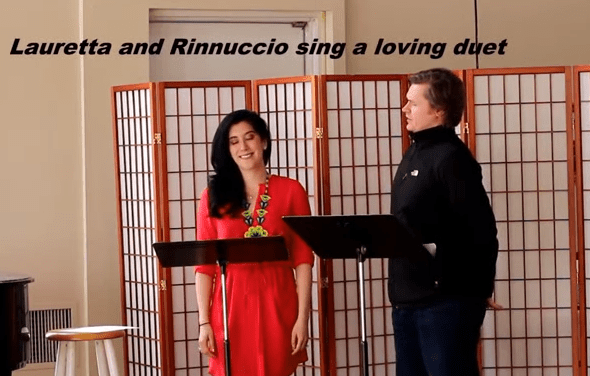
I think every opera needs a piece early on that convinces the audience to stay engaged for the rest of it. Musical theatre has a strong tradition of an engaging opening number. It’s a little more flexible in opera, but I think even classical works have that piece, whether it’s Verdi’s “Libiamo” or Bizet’s “Habanera.” Coming after Puccini’s brilliant Gianni Schicchi, Buoso’s Ghost has a duet at the beginning. It’s sung by the young lovers, Lauretta and Rinuccio. It’s tonal and passionate and designed to keep the traditional opera audience from tuning out.
Here it is, sung by Sara Duchovnay and Kirk Dougherty as they prepare for the OperaDelaware and Baltimore Concert Opera production.
For more on Michael Ching, check out this interview with Baltimore Concert Opera.
This month we got to know composer Michael Burkhardt, who is particularly known for his skill as an organist, choral clinician, hymn festival leader, and for his creative work with children.
How did you first become involved with music?
I became first involved with music when my grandmother, a self-trained church organist, taught me to play a few songs on the piano. I then sang in the first-ever children’s choir at the church of my growing up, a country church of 100 or so people in an unincorporated village in Wisconsin, a church where everyone seemed to sing, whether they could match pitch or not—what a gift! I began studying clarinet in sixth grade in public school and applied everything I learned in my clarinet lessons and church children’s choir experience to playing the organ at the church. By eighth grade, I was one of the organists who played on a rotational basis for worship. Hearing a live performance of Paul Manz’s Partita on St. Anne during that period convinced me forever that I needed to be involved in performing and creating music.
Was there a critical moment when you became a composer, or was it gradual work and realization?
I believe there was a creativity seed planted inside me before I was born. I have always loved making and creating things, whether it was at the keyboard or in the kitchen or shop. I never planned on becoming a composer, it seems to have just happened. My first published compositions began as organ and choral improvisations for worship and concert that were later transcribed by myself and at times, by and with my students.
Where or when do you feel most inspired to compose?
I am inspired to compose when I feel compelled and convicted to create a piece for worship or concert that will inspire, engage, teach, and challenge the adults and children with whom I work. I am also inspired when a text, albeit old or new, makes it way in front of me, and keeps taunting me to create a musical setting of it. I am probably most inspired when, in worship or leading a hymn festival, the singing by the congregation and choirs, enlivened by the Spirit, energizes me to create on the spot, in the moment.
What is your favorite medium to write for?
Choral music and hymn-based organ music.
How much does a piece of yours change from its inception to its publication?
In relation to an organ piece, the published version is really a composite transcription of multiple improvisations on the same hymn tune. Hence, the organ piece for me is ever-changing, but for the performer it is what it is on the page.
Regarding choral editions, there is not much change.
Regarding choral settings of hymns, at times there is little or no change, and at other times I wonder how I could have imagined and thought that what I created would really work with singers or result in a musically satisfying offering. Thank goodness for grace and my own choirs who are willing to try out new works!
In relation to non-hymn based choral works, there is little or no change, but the compositional process takes much longer from inception to completion, resulting at times in several versions composed and discarded before the version that feels right emerges.
How do you spend your time when you’re not engaged in musical activities?
Traveling, hiking, and connecting with people, especially in coffee shops!
What’s your next project, musical or otherwise?
Working on organizing the materials, procedures, and processes of the Hearts, Hands and Voices Series for worship and fine arts children’s programs. The series represents a variety of different kinds of musical resources to provide children’s choir leaders with creative and educationally sound resources.
For a complete listing of Burkhardt’s works published by MorningStar, click here.
For another great story on Michael Burkhardt, check out EMU Today’sarticle from September 2017.
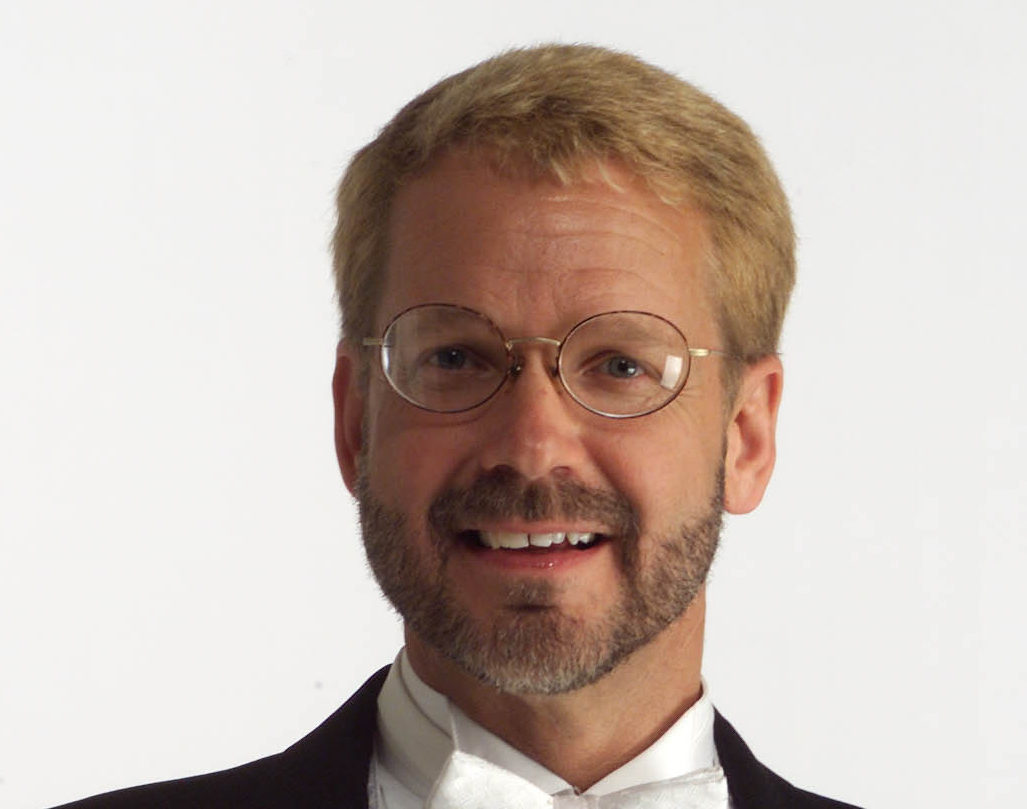
Internationally known for his innovative and inspiring hymn festivals and for his creative work with children, Michael Burkhardt is in frequent demand as a choral clinician, organ recitalist, and hymn festival leader.
Dr. Burkhardt is Artist-Professor of Organ at Eastern Michigan University, and for the past nine years has served hearts, hands and voices Worship and Fine Arts Program as Artistic Director and Holy Cross Lutheran Church as Cantor. From 2001-2007 he served on the faculty of Carthage College (ELCA) in Kenosha, Wisconsin, as Director of Choral Activities, College Organist, and Artist in Residence. Prior to his appointment at Carthage, he was a Faculty Associate in organ at Arizona State University, Tempe, Arizona. Dr. Burkhardt is a graduate of Carthage College, Kenosha, WI. He earned his M.M. degree from Southern Methodist University, Dallas, TX, and his D.M.A. degree from Arizona State University, Tempe, AZ.
He has performed and led seminars at both national and regional events for the American Guild of Organists, the Hymn Society, the Association of Lutheran Church Musicians, the Presbyterian Association of Musicians, the Fellowship of United Methodists in Music and Worship Arts, and the American Choral Directors Association, and since 2003 he has made seven performance-teaching tours to South Korea and Singapore. He will return to Singapore in November of 2018 to prepare and conduct children’s and adult festival choruses for and in an Advent-Christmas concert at the Esplanade, the country’s newest and foremost concert hall. In addition, he will present several organ recitals and workshops throughout the country.
Dr. Burkhardt is author of Part-Singing Global Style (a resource focusing on sequential part-singing techniques in treble arrangements of global pieces), Singing with Understanding (a curriculum utilizing the great hymns, folksongs and spirituals of the Church to share faith stories and to teach the elements of music and worship), Read ‘n Ring (a graded curriculum for teaching literacy to and exploring musicianship for handbell/handchime ringers), and Worship for the Young Child (a worship resource providing engaging, inclusive worship experiences for young children with teaching guides), and Creative Hymn Playing (a hymn-based improvisation method-resource for organists). He is composer of three settings of the Eucharistic liturgy, A New Song, Missa St. Andrew, and Missa Mixolydian as well as numerous organ improvisations, choral octavos and handbell compositions.
This month we got to know Judith Shatin, composer, sound artist, community arts partner, and educator. Her music, called “something magical” by Fanfare, reflects her fascination with the arts, the sounding world, and the communicative power of music. Known for her dramatic acoustic music, she has also created a large body of path-breaking electroacoustic music. We asked her about those intersections of acoustic and electroacoustic music, and more.
In an interview with NewMusicBox a few years ago, you spoke about studying abroad in Jerusalem, and how upon your return, you organized a composition recital rather than a typical piano recital, and how this encouraged you on your path as a composer. Did you waver following that, or were you a composer from that moment on?
Following my return from Jerusalem for my senior year at Douglass College, I studied with the outstanding composer Robert Moevs at Rutgers College. If anything, I became even more enthralled with composition, and this led to my quest to present a senior composition recital, rather than the piano recital that was expected of me. After managing that, I never wavered in my decision to follow this path.
You have a background and are active in computer and electronic music—you’re the founder of the Virginia Center for Computer Music at the University of Virginia. At ECS we know you as a composer of choral and vocal music. Historically these two areas don’t often go together…what do you think about that? What draws you to both?
It’s true that choral music has not traditionally drawn composers who are engaged with digital media. However, I have personally never made any distinction between these domains. I compose for both individually, and love combining them as well. My Beetles, Monsters and Roses, for treble chorus and electronics, commissioned by the San Francisco Girls’ Chorus, was the first electroacoustic piece they performed.
I have composed numerous acoustic choral pieces. Most recent is ‘Tis You, a setting of the beautiful poem Listening by Amy Lowell. Commissioned and premiered by the Voorhees Choir at Douglass College, my alma mater, for their Centennial, it is scored for SSA, string quartet and piano, though there is also a version for SSA and Piano. And this season, Illinois Wesleyan University, directed by Scott Ferguson, has commissioned a piece for unaccompanied SATB chorus in its ongoing choral commissioning series.
Do you have a favorite medium to write for?
I really don’t have a favorite medium—I love roaming around the universe of sound and what I compose just depends on the situation. My most recent piece is Ice Becomes Water, for string orchestra and electronics that I fashioned from field recordings shared by glaciologist Oskar Glowacki. This one was commissioned and just premiered by the terrific San Jose Chamber Orchestra. I chose this topic out of my concern over climate change, and a desire to join help raise awareness about it. While I don’t have a favorite medium, one of my favorite aspects of composing is collaborating with performers, and especially those who have an exploratory approach.
Computers and composition are both fields in which women are minorities. What has your experience been like from that perspective?
There have certainly been challenges being a women composer as well as one active in electronic media. However, I’m a determined person, and have just kept going no matter the headwinds. I have also been an advocate for contemporary composers through my service as President of American Women Composers, former board member of the League/ISCM and American Composers Alliance, and as current board member of the International Alliance for Women in Music and the Atlantic Center for the Arts.
When do you feel most inspired to compose? What’s your compositional process like once you’re inspired?
I don’t have an easy answer to that question. Ideas come both bidden and unbidden. What I can say is that the more involved I am in a project, the more quickly ideas come, and the more inspired I feel.
As to process—it is a blend of conscious and unconscious. I typically start with a clear overall shape and clarity about the structural pillars. However, I am often surprised along the way. I also work through many drafts, and the process is an intricate one. It’s difficult to define one’s style, but I would say that my music is guided by underlying harmonic motion, hidden and interrupted as it sometimes is. Again, this differs considerably from piece to piece.
You’re a very active teacher, both at the University of Virginia and at festivals and conferences. What’s your favorite topic to teach?
Teaching is fascinating in so many ways. I enjoy the exchange of ideas, the liveliness of it all, the ‘aha’ moments that both my students and I often have. And I very much enjoy meeting students in different contexts—I have worked with very advanced students at a variety of festivals and schools, and also with some very young children, especially while involved in a project called Preserving the Rural Soundscape, which ultimately led to my Singing the Blue Ridge, for mezzo, baritone, orchestra, and electronics made from indigenous wild animal calls.
As to favorite topics to teach—composition! But my very favorite is teaching composition as response to a particular area. For instance, one of my seminars was called Parsing the Electroacoustic, and the students read widely about perception of electroacoustic composition, as well as composing pieces in response to these readings and discussions. I also established a choral composition course at the University of Virginia. It seemed to me that this should be taught as a topic in its own right, and that is all too rare.
How do you spend your time when you’re not engaged in musical activities?
My time when not spent on composing has until now been taken up with teaching and the administrative work that goes along with it, though my husband (cognitive psychologist Michael Kubovy) and I always have made time for family and friends. We have also had the good fortune to team-teach ‘Psychology of Music’ and ‘The Mind of the Artist.’
Any exciting projects on the horizon?
I am just now stepping down from my regular teaching position at the University of Virginia to focus more exclusively on composing and other music-making activities. I am looking forward to having the time to devote to some larger projects that have been percolating for a while. First, though, in addition to the choral piece mentioned above, I have just started on a commission for mezzo and piano. My work often goes like this, jumping among a wide variety of media. In whatever domain, it is always an exciting journey.
Recent choral performances include Songs of War and Peace by the Southampton Choral Society, who performed it on their WWI Commemoration concert. It is a setting of four powerful poems on the topic, and is scored for SATB + piano or chamber orchestra.
See a list of Shatin’s works published by
E. C. Schirmer here.
Next month OperaDelaware and Baltimore Concert Opera are producing of Puccini’s Gianni Schicchi and my 1996 sequel, Buoso’s Ghost. Our works are like children—it’s best when they grow up and leave the house. (Unfortunately, some stick around on the shelf and don’t pay their fair share of the rent) I’ve been lucky about Buoso. It’s been fairly popular, with performances over the years at places like Pittsburgh Opera Center, Opera Memphis, Indianapolis Opera, Saratoga Opera and more recently at New Jersey Opera and SUNY—Potsdam.
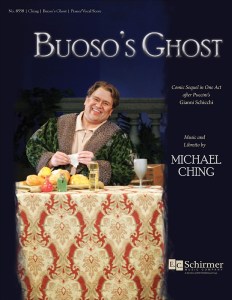
Buoso’s Ghost Piano/Vocal Score
I’ve been asked to conduct the Schicchi / Buoso double bill and, to keep with the metaphor of our older works as our grown-up children, I find things that I wish I had done differently with their upbringing. Frankly, now in 2018 I have to get to know Buoso in the same way I have to get to know Schicchi, to study the beat patterns, dramatic flow, orchestration, and vocal challenges that will be part of the rehearsal process. It’s a bit of an ethical obligation to get it right as performers and audience members will assume that your word on the piece is definitive. Someday, somebody in the OperaDelaware cast will say “I remember when Ching did it this way…” and that will seem like wisdom of the ages.
Here’s a piece of composerly business advice I’d give which goes back to the history of Buoso. The advice is: “Get it in writing.” Once when I was running Opera Memphis, I got permission to produce an adaptation of a famous author’s work, only to have the rights bought out from under me by a film company. This was twenty years ago and to this day, a film based on this important American novel has not come out. I had a similar case as a composer—I started work on a project with assurances from the opera company and the author’s agent that everything was great, only to have the agent change and the verbal permission was immediately revoked.
Back to Buoso’s Ghost. It was originally workshopped at the Chautauqua Opera. The assumption all along was that the work would go on to be premiered there. But the administration—which had been there for years—changed, and all of a sudden, it was somebody else’s project. Like a couch belonging to an evicted tenant, Buoso got put out on the curb. So, even if you’ve got friends and assurances, the advice is, get it in writing or you might not get it at all.
I promise to follow this up next month with pictures and a report from rehearsals at OperaDelaware.
In the meantime, here’s a little teaser I did for OperaDelaware for a season announcement. My cat, BINGO, was annoyed.
Buoso’s Ghost is being performed at OperaDelaware on April 29 and May 5 and at Baltimore Concert Opera April 13 and 15. It is also playing at University of Central Florida April 13 and 14. In addition to being a composer, Michael Ching is an opera consultant at E.C.Schirmer and can be reached at MrBillow [at] gmail [dot] com.
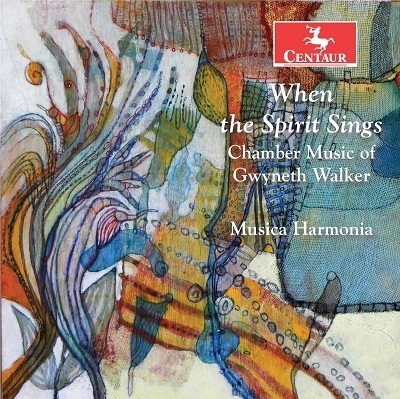
This release features the works of Gywneth Walker, one of the most important composers of our modern day. Widely performed throughout the world, the music of Gwyneth Walker is beloved by performers and audiences alike for its energy, beauty, reverence, drama and humor. Dr. Walker is a graduate of Brown University and the Hartt School of Music. Walker’s catalog includes over 300 commissioned works for orchestra, chamber ensembles, chorus, and solo voice. [ArkivMusic]
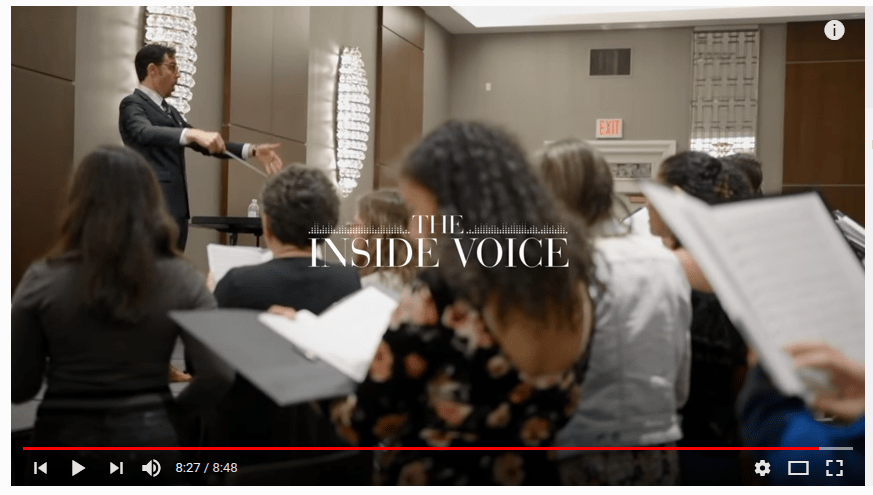
We were so excited to find out that J. W. Pepper created a short video series on composer Michael John Trotta. Trotta has been a MorningStar composer for several years, and more recently has come out with pieces more suited to the Galaxy catalog. This spring, we’re releasing his new work For a Breath of Ecstasy, heard throughout the video series.
Growing up in a musical family, Michael John Trotta was immersed in music from a very young age. As a child, he was in awe of the amazing musicians around him, but he always thought that musical talent was something some people just had. In this interview, Trotta talks about how he went from thinking music was out of reach for him to becoming one of the preeminent young composers in the world.
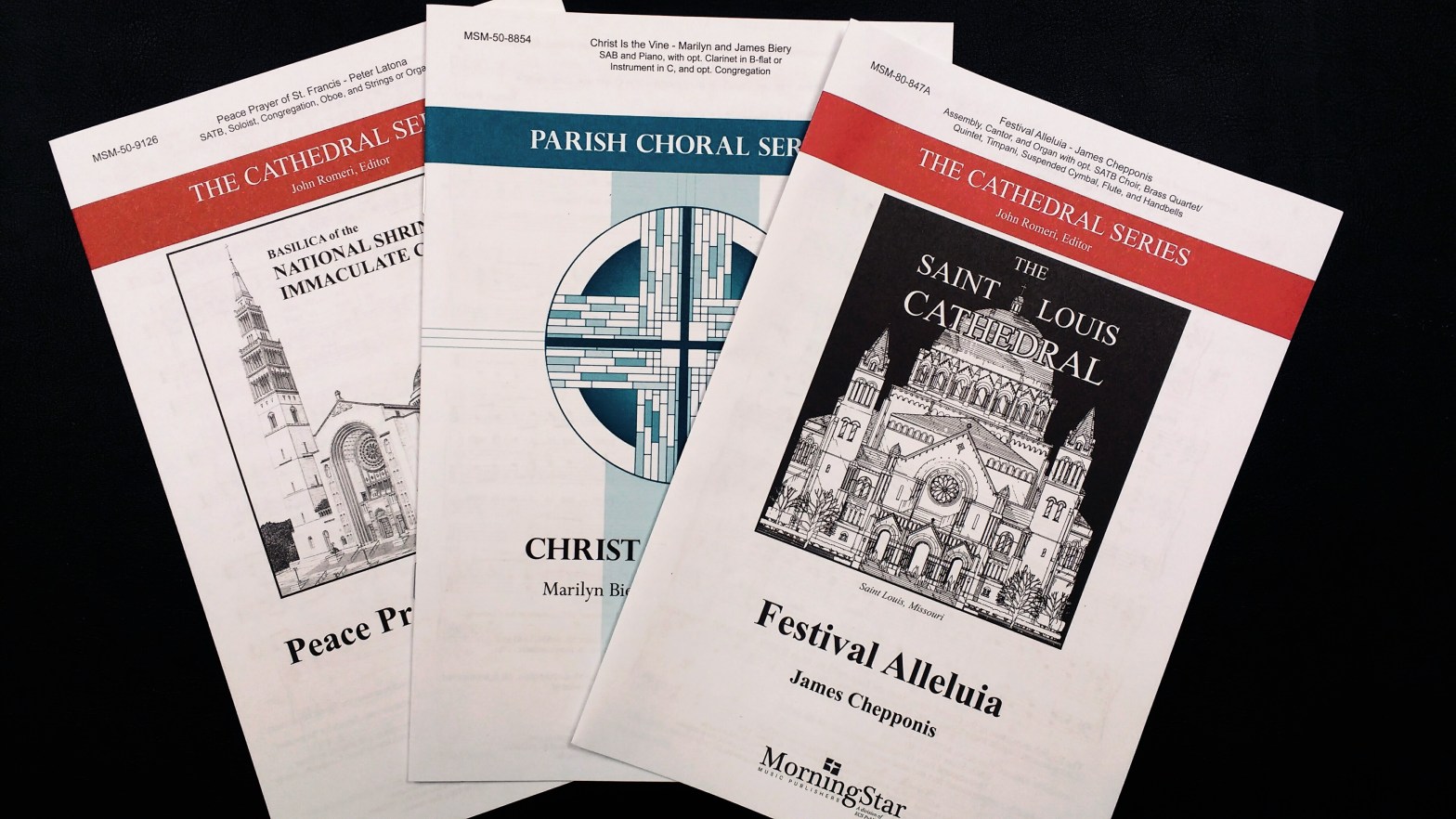
Reading sessions are one of our favorite ways to interact with music directors and musicians. Choral reading sessions are an engaging event requiring active participation from the attendees, who in turn get to experience a lot of music in a short amount of time. Similarly, organ or instrumental sessions can offer exposure to new music in a more casual environment than a service or recital.
MorningStar has been actively involved in providing reading sessions since its founding in the 1980s. In particular, there’s been a strong tie between MorningStar and NPM, and we welcome the opportunity to collaborate and help with chapter meetings in several ways.
Drop us an email requesting some sample music for a quick read through at an upcoming chapter meeting. This can provide some access to new resources without devoting an entire meeting to a reading session. Simply let us know how many copies you need for a single copy for each director, and we will be glad to assist you.
Provide a complete evening meeting devoted to new literature. These sessions can be particularly effective when you mix in some piano, organ, or instrumental music. The sessions can be focused on particular seasons, or can be general in nature. They can also include music of varied difficulties. Many chapters have spread the leadership of these sessions up among chapter members to get more people involved, and others have even asked a local choir to participate by singing some selections from their repertoire. Other chapters have created unique organ and piano reading sessions by receiving new music from us and then dividing pieces up between chapter members to perform. It is a quick way to insure member involvement and to discover new publications.
Contact us about having a MorningStar representative at your session. We’ll be glad to work with you to try and find just the right clinician for your situation.
If you’d like more information about possibilities, please email us!







 In Tune blog