Chimera Waltzes at Red Lodge Music Festival – John David Earnest 

The Red Lodge Music Festival featured John David Earnest‘s Chimera Waltzes written for flute/bass flute, clarinet, and piano in a concert June 3, 2017. The performance highlighted the musicianship of the Scott/Garrison Duo (Shannon Scott, clarinet, Leonard Garrison, flute) along with Melissa Loehnig Simons on piano.

The Red Lodge Music Festival marked its 54th season. Located just one hour from Yellowstone Park, students experience high quality education with directors, musicians, and professors from across the nation.

The Scott/Garrison Duo recently included Chimera Waltzes on a CD recording from Albany Records. More information here.

The performers

leonard2
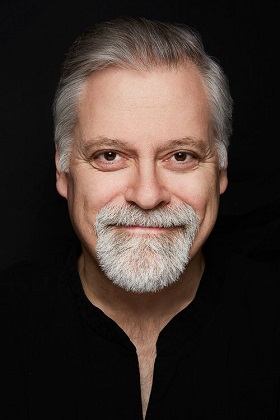
Leonard Garrison

Leonard Garrison is Professor of Flute and Associate Director of the Lionel Hampton School of Music at the University of Idaho, flutist in The Northwest Wind Quintet, The Scott/Garrison Duo, and the IWO Flute Quartet, and Principal Flutist of the Walla Walla Symphony. A recipient of an Idaho Commission on the Arts Fellowship, a President’s Mid-Career Award at the University of Idaho, and 2016 prizes as Instrumental Soloist and in Chamber Music from The American Prize, he is Artistic Director of the Red Lodge Music Festival in Montana and faculty at Blue Lake Fine Arts Camp in Michigan. He has recorded nine critically acclaimed CDs for Albany Records, Capstone Records, and Centaur Records and been a soloist on National Public Radio’s Performance Today, winner of the 2003 Byron Hester Competition,  concerto soloist on both flute and piccolo, and a frequent performer at National Flute Association conventions. Leonard holds a Doctor of Music degree from Northwestern University, where he studied with Walfrid Kujala and Richard Graef. He received Master of Music and Master of Arts degrees from Stony Brook University, studying with Samuel Baron. His Bachelor of Music is from the The Oberlin Conservatory of Music, where his teacher was Robert Willoughby.


Image result for shannon scott clarinet
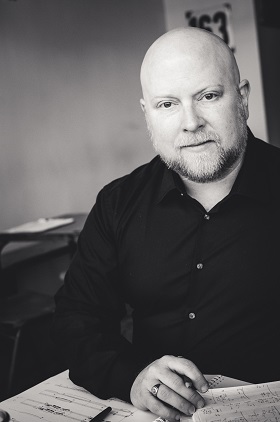
Shannon Scott

Shannon Scott is Assistant Professor of Clarinet, Music History and clarinetist for Solstice Wind Quintet at Washington State University School of Music. In summers Scott teaches and performs at Eastern Music Festival in North Carolina and Red Lodge Music Festival in Red Lodge, Montana. From 1988 to 2006 she was principal clarinetist of the Tulsa Opera Orchestra and the Tulsa Philharmonic Orchestra. Scott holds degrees from Juilliard, Ecole Normale de Musique de Paris, Conservatoire Regional Marcel Dupre, Yale University and Northwestern University. Member of the Scott-Garrison Duo (flute and clarinet) with husband Leonard Garrison, their CDs Barn Dances and Perennials are on the Albany Records label.


Image result for Melissa Loehnig Simons
Melissa Loehnig Simons

Active as a solo pianist, chamber musician and collaborative performer, Dr. Melissa Loehnig Simons is currently on faculty as Assistant Professor of Music in Piano and Theory at Central Methodist University in Fayette, Missouri. She spent five summers employed as a staff pianist at the American Institute of Musical Studies (AIMS) in Graz, Austria.  She now spends her summers as a part of the piano faculty for the Red Lodge Music Festival, held in Red Lodge, Montana.  She has also been chosen from a national field of applicants for the Opera Theatre Music Festival of Lucca (Italy), the Baldwin-Wallace Art Song Festival, and for the highly competitive Songfest Program in Malibu, California. Dr. Simons has performed throughout the United States, including recently with Choral Arts, a semi-professional chorus based in Seattle.

Source: Faculty Recitals | Red Lodge Music Festival

Music of the Spheres, Capitol Hill Chorale premiere — Kevin Siegfried

On June 3 & 4, the Capitol Hill Chorale’s 2016-2017 season ended with a celestial-themed program featuring the premiere of Music of the Spheres by Kevin Siegfried. Also on the program are works of Vincenzo Galilei (father of Galileo Galilei), William Herschel, Samuel Barber, and Gustav Holst.

Music of the Spheres is a five-movement work for SATB chorus and glass armonica, featuring texts by Johannes Kepler, John Donne, and the Psalms. The piece is dedicated to Swiss astrophysicist (and Siegfried’s relative) Arnold Benz, whose book “Astrophysics and Creation” was just released in an English language version earlier this year.


The Capitol Hill Chorale has released a podcast to explore the intersections of music and astronomy in Music of the Spheres. Listen to the podcast here.


Source: Music of the Spheres — Kevin Siegfried

Interview with May’s Composer of the Month: Frank Pesci

Frank Pesci

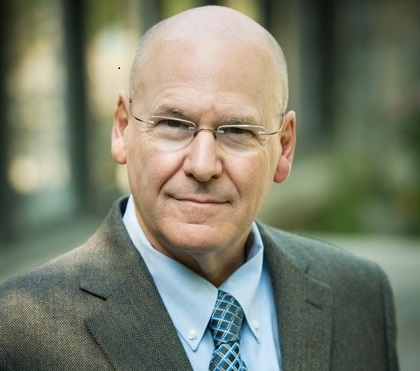
Frank Pesci (b. 1974) is a composer of “… sophisticated music with surprising harmonies” whose works have been performed across North America and Europe. His catalog includes 40 choral works, 11 song cycles, nearly 20 chamber and concert scores, and five operas, one of which – The System of Soothing – was selected for the 2017 Fort Worth OperaFRONTIERS showcase.

1.Your latest opera, The System of Soothing, was recently featured at Fort Worth Opera’s “Frontiers” New Opera Showcase. It’s based on a short story by Edgar Allan Poe. What drew you to this story?

After college, I laid out a ten-year plan to develop the skills I thought I needed to write opera.  Beginning with the voice, I wrote and sang choral music and art song. Next, I worked my way from solo instrumental pieces to chamber music to full orchestra, settings songs for voice and chamber instrumentation and simulating Puccini arias and duets along the way.

About six years into this project came an opportunity. Axe 2 Ice Productions was an alternative theater troupe in Boston whose mainstay was Bent Wit Cabaret, a monthly mashup of burlesque, spoken word, performance art, musical numbers, and other oddities.  The music director, a colleague of mine, asked if I would write a seven-minute opera for a “mystery” themed show.  Of course I said, “Yes!” Considering the theme, my mind immediately turned to Edgar Allan Poe, and I quickly settled on his story, “The System of Dr. Tarr and Prof. Fether” with its maniacal asylum proprietor, a melodramatic sense of foreboding, a slew of fantastic side characters, and an unpredictable – yet inevitable – climax that could only have come out of the mind of Poe.

The original version came to 15 minutes with piano accompaniment.  I trimmed it down to 8 minutes for Bent Wit and scored it for their house band.  A year later, Boston Opera Collaborative presented the original 15-minute version on a program that was aptly titled “Opera Goes to Hell.”

Three years later, I expanded the work in order to realize a more complete adaptation of Poe’s story, resulting in a three-act, 90-minute piano/vocal score. Inspired by the libretto of John Adams’ Dr. Atomic, which borrows texts of Baudelaire, John Donne, and the Bhagavad Gita among others, I turned to Poe’s poetry, employing it throughout the libretto to develop characters, and provide for aria moments. Poe’s poetry allowed me to explore a narrative that expanded upon the original short story, adding richness and motivation for the principal and secondary characters alike. His poems grounded the theme of the opera – how slight shifts of perception can alter one’s understanding of seemingly obvious dichotomies, like “wakefulness” and “dreaming,” or “madness” and “sanity”.

2. While this is your first opera to be added to the E. C. Schirmer catalog, you have over thirty choral titles published with us. How would you compare your approach to composing for choirs to that for opera?

In many ways, if I write something in my operas, its roots are somewhere in the decade of choral composition and performance I experienced after college. During this time, I learned about singers, their voices, and how they thought and operated (no small feat).

My experience as a professional singer and music director influenced my choral music with practical considerations for what I call the “Any Given Sunday” choir – a typical mixture of volunteers and paid section leaders with about 20 minutes of rehearsal time dedicated to any particular piece. This shaped everything in my choral writing from structure and harmonic palette, to melodic devices and even the inclusion of optional accompaniments.  This focus on practicality has made its way into how I present my operas, particularly in terms of flexible casting and orchestration options that allow the works to be considered by companies with widely varying budgets, and reinforcement and space considerations.

The types of voices I’m dealing with in an operatic context allow me to write in a way that would not be idiomatic or appropriate in typical choral settings. However, the fundamentals of all of my vocal writing – even for opera – are based on my choral experiences. This includes the basics of range, balancing voices with accompaniments, and using lyricism and text to illuminate each other. Also, I developed my sense of vocal drama by writing for choirs. It may be strange to think about it this way, but my choral works – no matter their duration – are structured using dramatic concepts that are inherent to stage works, including three-act structure, the use of tension for dramatic effect, and the placement and resolution of climactic moments.

3.  When you need or want to write something, is there a method you use to find inspiration? What’s your process for writing music?

I used to obsess over my process in hopes that I would find the exact conditions wherein I could be most productive. What came out of all that navel-gazing, however, was an understanding of how the act of composing (or being creative in any sense), for me, had to become habitual. I have made a habit out of being creative – it’s just something I do every day, without preamble. At this point, it’s a way of life: I wake up, I brush my teeth, I feed my kid, I write opera (or whatever else is on the docket).

From a purely technical standpoint, I’ve adapted my Jazz technique to suit my writing, in that I begin by improvising – either at the piano, or vocally. I have trained my ears to sift through the garbage (of which there is plenty) for a nugget of harmony or a melodic turn of phrase which I can use as a jumping off point, and it goes from there (or sometimes it doesn’t!). If text is involved, the words become part of the improvisation, drawing out the rhythmic possibilities as well as variations in spoken inflection that can affect musical phrasing.

In all instances, however, melody and lyricism is most important.  Melody is what I’m drawn to above everything, and what impacts all other aspects of whatever I’m working on.

4. How did you get involved in music, and when did you begin composing?

I come from a musical family. All of my siblings sing, or were instrumentalists at some point. I was led to music by my father, who unwittingly instilled in me what would become the two pillars of my musical aesthetic – Jazz and opera. He was a “dance band” bass player in his New Jersey youth who later became the middle-aged man sitting in his recliner and sobbing along with Met radio broadcast of La Bohème.

Over the years, I established a diverse musical background. My performing experience spans rock, pop, Jazz, funk-fusion, liturgical music, pit bands, musical theater shows, opera, lonely coffee house singer-songwriter stints, and a smattering of orchestra gigs. Throughout all of it, however, I was writing and arranging. My composition interests mirrored my performing outlets as time went on.

I earned a Jazz studies degree from the University of Southern Mississippi, which is where I also studied so-called “serious” composition. Those studies, combined with my simultaneous entry into choral performance and conducting, started the snowball rolling down the hill.

5. Describe your compositional style. What inspires your music?

If there were one word I had to use to describe my writing, it would be “lyrical”. I have been blessed with the ability to write melodies, and I do not take it for granted; around this ability I have built my technique, and (to an extent) my reputation.

As far as my pedagogical backstory, all of my teachers – and their teachers – were active in the mid-twentieth century between Boston, New York and Philadelphia. There’s also strong Italian and French influence running through my education, but for some reason, I have a tendency to sound like a British composer (my Irish mother would be proud).

As I mentioned above, I have a broad background performing and writing in a variety of styles. All of these styles continue to inform my writing – somehow it all comes out in the wash.

And I don’t know if it’s inspiration or just good sense, but I listen to Ravel every day.

6. Describe life as a composer. Feel free to touch on challenges and/or joys of this career!

I’m glad I did the work to free myself of the quest for a “perfect process”, because real life as a composer has little to do with perfect timing and conditions, and a lot to do with getting a job done in the time allotted. Frequently, I consider being a freelance composer as just another job – I have clients, they have needs, I fill those needs. Time management is essential, as is professionalism and attention to detail. The preciousness of the “artist’s life” was beaten out of me a long time ago. This is not to say that I am not grateful for the opportunity to do what I do, but when I “went pro” in this business, I went pro in the business, and this has made all the difference in how seriously I take my calling to be a composer.

The networking, hustle, and administrative work would take up more time than the writing, if I weren’t careful. For this aspect of the work, I am grateful that I had a ten-year career as an administrator for various arts organizations. My career included community relations, social media and marketing, fundraising, and executive leadership, which puts me in a relatively stable position to manage the business side of my own compositional activities.

I should mention that I have lived in Germany for the past four years. I’m working contacts and opportunities on both sides of the Atlantic, which is necessary, but a serious juggle, and I have to constantly think in local time, as well as Eastern Standard Time (as well as in two different languages).

All that being said, I enjoy writing – it’s honest work, and a way of life and I am living it. Even better are the opportunities I get to collaborate with performers.  These experiences are the real tests of my skills, and I crave the opportunity to engage with skilled performers and interpreters of my work.

7. When you’re not writing music, how do you spend your time?

I have a two year old daughter; she takes up a bit of my time! My non-musical, non-family energies go into (not surprisingly) other creative endeavors, the majority of which are gardening and cooking. I have been refining my Butter Chicken recipe for almost ten years (I’m getting close!), and this year, my tomato plants are out of control.

8. Is there any recent or upcoming news you wish to highlight?

Fort Worth Opera’s Frontiers program was an incredible experience, not only in terms of exposure for The System of Soothing, but also in that I got face time with decision makers in the field.  I got to listen to their critiques of my work and the work of my other composer colleagues, and the amount of learning that I can apply to Soothing as well as my other developing and upcoming operas is immeasurable. I’m excited to see what is in store for this opera in coming seasons.

This season, I’m looking forward to premiers at the Härnösand Opera Academy and Festival in Sweden, the Neue Musik in St. Ruprecht series in Vienna, the Nahant Music Festival in Massachusetts, and a major new work slated for Christmas 2017 in Charlotte.


Click here to learn more about Frank Pesci.

Daron Hagen Conducts Orchestra Society of Philadelphia

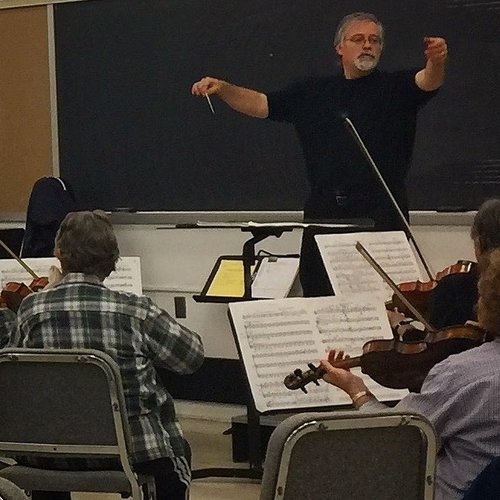
Rehearsal/reading session with Orchestra Society of Philadelphia of the Beethoven Symphony No. 8 and Hagen’s Postcards from America. June 2, 2017.

Daron Hagen and the Orchestra Society of Philadelphia have a long history which has endured for 34 years. Since 1983, Daron has returned to conduct and work with the ensemble 25 times to rehearse Wagner Meistersinger Overture, Beethoven’s 3rd and 6th symphonies, the Schumann Cello Concerto, Brahms’ Academic Festival Overture, Copland’s Two Pieces for String Orchestra and Symphony No.3, Leonard Bernstein’s Symphony No. 1: “Jeremiah,” a dozen of his own orchestral works, as well as new works by Kile Smith, Joel Boyd, Tevi Eber, Colin Minigan, Neil Rolnick, Gilda Lyons, and others.

Source: DH Conducts OSOP — Daron Hagen

Gwyneth Walker – Commission from Toledo Choral Society

As part of their 100th Anniversary Commissioned Work Project, the Toledo Choral Society commissioned a work from Gwyneth Walker. The piece will be debuted in June 2020. Dr. Walker was also welcomed on June 11, 2017 as a special guest at a Toledo Choral Society concert, which highlighted John Rutter’s Requiem. To an Isle in the Water focuses on the beauty and history of the Great Lakes region and the poetry it inspired.

The Toledo Choral Society

The Toledo Choral Society has performed Handel’s Messiah every year since its 1919 establishment. The group, based in Ohio, is led by conductor/Music Director Richard Napierala II. In 2012, Rick became the fourth musical director of the Toledo Choral Society. Under his leadership, the Choral Society has performed works such as Faure’s Requiem, Mozart’s Missa Brevis in C, John Rutter’s Gloria, Ola Gjeilo’s Sunrise Mass, Haydn’s Creation, Handel’s Messiah, and many other choral works found in the professional repertoire.  Rick has been actively engaged in the membership and musical growth of the Society through collaborative efforts with the Toledo Symphony Orchestra, the University of Findlay Concert Chorale, and the Alma Drum and Dance Experience.  Additionally, he has engaged the ensemble in the commissioning of a large choral work which will commemorate the Centennial Celebration of the Toledo Choral Society in 2019.  These efforts have allowed traditional and non-traditional audiences to be exposed to the beauty and excitement of contemporary choral music.


Source: Toledo Choral Society home

New Amsterdam Singers gives NY premiere – Work by Ron Perera

In a concert of new American works inspired poetry and folk song, the New Amsterdam Singers performed the New York premiere of Ronald Perera’s When Music Sounds. New Amsterdam Singers is an amateur chorus of 70+ skilled singers whose performances in New York City and abroad have won critical acclaim.


Ronald Perera (b. Boston 1941) was born in Boston on Christmas Day, 1941. He received his undergraduate and graduate degrees in music from Harvard, where his principal composition teacher was Leon Kirchner. He also worked independently with Randall Thompson. Subsequently he spent a year on a John Knowles Paine Traveling Fellowship studying electronic music at the University of Utrecht. His more than seventy compositions include three operas, song cycles, chamber, choral and orchestral works and—in the early part of his career—several works which combine voices or instruments with electronically generated sounds.

He is especially known for his many text settings. Reviewing the recording of his cantata, The Outermost House, John Story of Fanfare magazine wrote: “Ronald Perera is among the finest living combiners of words and music.”

Source: New Amsterdam Singers – Concert 3

New to E. C. Schirmer’s Opera Catalog: Works from Tom Cipullo & David Mason, and Michael Ching

E. C. Schirmer is thrilled to announce two new additions to our opera catalogue. After Life (2015) by Tom Cipullo, libretto by David Mason, is a chamber opera in one act for soprano, mezzo, and baritone set in World War II Paris. Michael Ching’s Buoso’s Ghost (1996) is a comic sequel in one act after Puccini’s Gianni Schicchi. Both works have received widespread attention from the opera community.


After Life

After Life was commissioned, and later recorded, by Music of Remembrance, a Seattle-based organization whose unique mission centers around the work of memory: of “remembering Holocaust musicians and their art through musical performances, educational programs, musical recordings, and commissions of new works.”

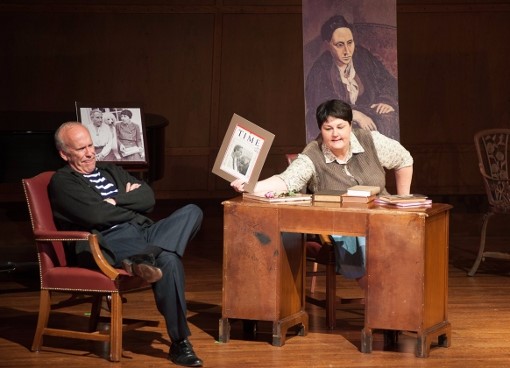
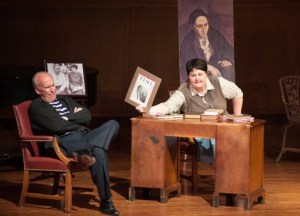
Photo by Michael Beaton. Production by Music of Remembrance (Seattle, 2015) with Catherine Cook (Gertrude Stein) and Robert Orth (Pablo Picasso).

Its story follows Gertrude Stein and Pablo Picasso as they are conjured back to life to debate their legacies and activities in WWII Paris. Their confrontation is interrupted by a young Holocaust victim who forces them to reconsider the meaning of death. It been hailed as a “finely wrought exploration of the role of art in times of grave crisis” (Washington Post) and “inventive, pitch-perfect, thought-provoking, and refreshing” (Oregon ArtsWatch).

At a Glance:
Chamber opera in one act for soprano, mezzo, and baritone
Instrumentation: flute, clarinet, violin, cello, piano
Duration: 50 minutes
Commissioned & Premiered by: Music of Remembrance
Recorded by: Music of Remembrance, released February 2016 by Naxos

For more information about these works, click here. Full scores and ordering information coming soon.

Tom Cipullo
Tom Cipullo

David Mason
David Mason


Buoso’s Ghost

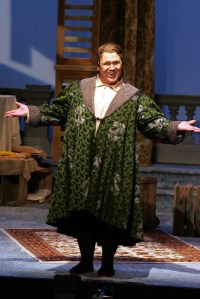
Opera New Jersey, 2006 © Jeff Reeder

Buoso’s Ghost was first staged with the Pittsburgh Opera in 1996, and received the official premiere at Opera Memphis in 1997. The opera begins where Puccini’s Gianni Schicchi ends, and traces the sinister dealings of Buoso Donati’s family, who have allegedly poisoned Buoso. Throughout the opera, Schicchi exploits the family’s plot to outwit them time and time again.  The Chicago Tribune remarked that “Composer and librettist Ching … borrows snatches of Puccini tunes and weaves them into his own conservative-eclectic idiom, tossing in bits of American pop … for merry measure. The vocal writing is expert, the orchestration light enough to allow the singers to project the text clearly. Buoso is charming and unpretentious ….”

At a Glance:
Comic opera in one act
Instrumentation: 2 flutes, oboe, 2 clarinets, bassoon, 2 horns, 2 trumpets, trombone, percussion, harp, synthesizer, strings
Duration: 40 minutes
Premiered by: Opera Memphis

For more information about these works, click here. Full scores and ordering information coming soon.

Michael Ching
Michael Ching

Major Performances

Pittsburgh Opera Center at Dusquesne (1996)
Opera Memphis (1997)
Indianapolis Opera (1999)
Chicago Opera Theater (2000)
Triangle Opera (2000)
Opera New Jersey (2006)
Opera Saratoga (2008)
Amarillo Opera (2010)
Southern Utah University (2010)
Bayview Music Festival (2011)
UNC-Chapel Hill (2014)
Texas State University (2015)
McGill University (2015)

 Upcoming Performances

SUNY Potsdam (2017)
OperaDelaware (2018)
University of Central Florida (2018)

Michael Ching also serves as the Opera Consultant for ECS Publishing Group. Please feel free to contact him directly in order to help match your available singers to the many works in the E. C. Schirmer and Galaxy opera catalogues.

Univ of British Columbia performs Chatman’s A Song of Joys for choir and orchestra

Jonathan Girard led the UBC Symphony Orchestra and Choirs in a performance of Stephen Chatman’s newly released major work for SATB Chorus divisi, timpani and percussion soli, and orchestra, A Song of Joys. The performance was presented as part of the 20th Anniversary of the Chan Centre for the Performing Arts on April 8, 2017. Galaxy Music is pleased to offer this work on our website and through music retailers worldwide.

Program notes by Tara Wohlberg:
A Song of Joys was commissioned by the Calgary Philharmonic Society with assistance from the Canada Council. The 21-minute work in seven movements, premiered in Calgary on May 2, 2014, was originally conceived as a companion work to Beethoven’s Symphony No. 9. Based on fragments of Walt Whitman’s “Leaves of Grass,” this piece shares several characteristics with the Beethoven masterpiece, including identical orchestral instrumentation and a critical role of the chorus.  More importantly, both works celebrate humanity and the spirit of love: the universal brotherhood of man through joy and the love of the heavenly father. From Whitman’s opening line, “O to make the most jubilant song!” to his concluding lines, ‘With the love of comrades, With the life-long love of comrades,’ the spirit of love, universal brotherhood, transcendentalism, and joy pervades the work.

A Song of Joys features two instrumental soloists—the timpanist and percussionist playing a vast array of percussion instruments. The work is unique in that it balances two distinct entities:  a frequently virtuosic, multi-timbral, poly-stylistic ‘double concerto’ versus large chorus with soli and orchestra. These two elements are either separated or combined throughout the contrasting movements. Two movements (“One Hour to Madness and Joy!” and “I dance with the dancers”) feature timpani and percussion soli with orchestra only.  The final movement, “With the love of comrades,” builds to the resounding climax of the work.             

Work details at a glance:
Difficulty: Medium
Instrumentation: 3[1.2.pic] 2 2 3[1.2.cbn] – 4 2 3 0 – timp+1 – str
Duration: 20:00

A Song of Joys


Click here for more information. 


Modern Classics: Michael Trotta’s Seven Last Words – MidAmerica Productions

“Michael John Trotta is an award-winning composer of choral music whose latest work, Seven Last Words, will be given its NY premiere in Carnegie Hall on May 27, 2017 as part of MidAmerica Productions’ 34th concert season. This will be the first time that Trotta will conduct his own composition in a MidAmerica Productions Carnegie Hall concert. We spoke with him to learn more about the piece and how he approaches his compositions.”

Read Manhattan Concert Production’s interview with Michael John Trotta, an award-winning composer whose latest work will be given its NY premiere in Carnegie Hall on May 27, 2017.

Source: Modern Classics: Michael Trotta’s Seven Last Words – MidAmerica Productions

Opera Canada & Canadian Music Teacher Reviews: Music by Stephen Chatman

Stephen Chatman’s music has been the subject of review in recent Opera Canada and Canadian Music Teacher magazines.

Opera Canada: Choir Practice by Stephen Chatman, CD Recording

Choir Practice

Choir Practice, a comic opera in one act composed by Chatman with libretto by Tara Wohlberg, was premiered and recorded by the University of British Columbia Opera Ensemble and Symphony. The album was released in 2016 on the Centrediscs label.

Wayne Gooding, Editor, writes, “Rare it is for a live student performance to enjoy a commercial release, rare still when that performance is the world premiere of a new opera…With its musical and linguistic twists and turns, non sequiturs and sudden dead ends, it all unfolds in the manner of Ionesco’s The Bald Prima Donna. Both composer and librettist seem to have enjoyed themselves enormously writing this piece, with Chatman drawing on a wide range of styles and influences to bring Wohlberg’s absurdist text to life.”

To read this review in its entirety, click here.
For more information about this CD recording, click here.
For more information about Choir Practice, click here.

Canadian Federation of Music Teachers Association: New Piano Music by Stephen Chatman

Mix and Match for Older Beginners

Mix and Match for Older Beginners

Mix and Match is an imaginative and diverse supplementary album especially created for older piano students. It is designed as a rare, innovative mix-and-match complement to any standard piano method book. Through an array of stylistically varied pieces, all paired with harmonically rich, imaginative duets, the older beginning student will be musically engaged and challenged. Tara Wohlberg was the text author for this series.

Jean Ritter of British Columbia writes, “My students and I had a great time playing through the thirty-six pieces. They all have complimentary duets that add depth and great colour and make for pleasant music making!…The book is pedagogically sound incorporating numerous terms and symbols our students learn in their theory books.”

To read the full length review, click here.
For more information about the Mix & Match series, click here.                                       

Etudes, Book 1

Etudes Book 1As with Chopin’s Etudes, this challenging set of five etudes can be used either for technique work or for concert performance. The music most assuredly allows for the pianist to demonstrate his or her technical and musical prowess.

Joyce Janzen of British Columbia says, “Each of these advanced technical challenges are a minute to a minute and a half long. Dynamic and pedal markings are frequent and precise. Changing meter often accomplishes a ritardando or a pause between sections. These are dynamic material for an eager advanced performer!”

To read the full length review, click here.
For more information about Etudes, click here.

Stephen Chatman

Stephen Chatman, one of Canada’s most prominent composers, is Professor of Composition at the University of British Columbia School of Music. He has received many commissions and composition awards, including 2005, 2006, and 2010 Western Canadian Music Awards “Classical Composition of the Year,” 2010 and 2012 SOCAN Jan V. Matejcek New Classical Music Award, three BMI Awards (New York), multiple JUNO nominations, Dorothy Somerset Award, Charles Ives Scholarship from the American Academy of Arts and Letters, and the 2001 BBC Masterprize short-list. In 2012, Dr. Chatman was appointed to the Order of Canada. Dr. Chatman’s choral pieces “are in wide demand in North America” (Historical Dictionary of Choral Music, 2010); his orchestral music has been commissioned by the CBC Radio Orchestra, Toronto, Vancouver, Edmonton, Calgary, Madison, and Windsor symphonies and performed by the BBC Symphony, Berlin Radio Orchestra, Montreal, Sydney, Seoul, San Francisco, Winnipeg, Quebec, St. Louis, Calgary, Detroit, Dallas, and New World symphonies.


Design a site like this with WordPress.com
Get started