You might have noticed that recently we did a soft launch of a new area of our company, E. C. Schirmer Classical. So much of what we do caters towards church and school markets, it was definitely time to create an area especially for works for the concert hall. Here you’ll find a concert calendar, featured composers, and a quick way to find exactly the works you’re looking for. The genres we’re catering to here are orchestra, opera and vocal music, and chamber music, which includes instrumental solos.
We’ll continue to develop this area of the website for the next several months, so if there’s something you’d like to see or if you have a performance coming up that you’d like to put on the concert calendar, let us know!
“a brilliant cycle of songs” – Joseph McLellan (The Washington Post)
“the most genuinely moving music of the afternoon” – Richard Dyer (Boston Globe)
“beautiful in ways both traditional and strikingly original” – Robert Faires (The Austin Chronicle)
“These songs were intimate, melancholy, haunting…legitimate modern heirs to the great tradition of German lieder” – Philip Greene (New Haven Register)
“she is a composer of great talent…her music is tonal, very accessible, colorful and often profound” – Robert Cummings (Classical Net)
“a composer who savours lyrical lines and harmonies peppered with gentle spices” – Donald Rosenberg (Gramophone)
“giving a strong sense of the poet’s voice” – Robert Hugill (Planet Hugill, London)
“much to admire in Hall’s music…graceful, nuanced vocal lines and imaginative piano parts” – Arlo McKinnon (Opera News)
“music whose beauty could enhance the text at hand without drawing attention away from that text…masterful writing in every respect” – Gregory Berg (NATS Journal of Singing)
“The tonal language is adventurous, and Hall’s text-setting is spot on and exquisite, even when she elevates the text to the vocal stratosphere” – Kathleen Roland-Silverstein (NATS Journal of Singing)
Musician Quotes
“through her brilliant tonal, textural, and rhythmic language, her work is immediately recognizable and wonderfully familiar…it is positively magical” – Stephanie Blythe, mezzo soprano (Metropolitan Opera, Fall Island Vocal Arts Seminar, Tanglewood)
“wonderful and effective art songs from one of America’s most prolific composers who is dedicated to song composition” – Alan Louis Smith, pianist and composer (USC Thornton School of Music, SongFest, Tanglewood)
“remarkable songs – gems with both substance and beauty” – Richard Lalli, baritone (Yale University)
“singers of every level will find challenging and satisfying repertoire in the music of Juliana Hall” – Darryl Taylor, countertenor (Director of Vocal Arts, University of California at Irvine)
“Juliana Hall writes true chamber music, creating an intimate and deep relationship between the piano and vocal line.” – Maggie Finnegan, soprano (First Place Winner, Washington International Competition for Voice)
“a treasure trove of vocal and musical opportunity that is worthy of anyone’s exploration” – Samuel Martin, pianist (Founding Artistic Director, Cincinnati Song Initiative)
“rich harmonies and hauntingly beautiful melodies” – Brian Armbrust, composer (Founding Artistic Director, Seattle Art Song Society)
“Some day soon, every recital in the world will have on it some songs by Juliana Hall!” – Dominick Argento, Pulitzer Prize-winning composer
“Juliana has mastered the ability to compose gorgeous art songs for any voice type” – Brian Asawa, countertenor (Metropolitan and San Francisco Operas, first countertenor to win the Operalia International Competition)
“her songs create a unique sound world that weave a wonderfully complex dramatic journey that always leaves you wanting more” – Megan Roth, mezzo soprano (Founding Artistic Director, Calliope’s Call, Boston)
“Juliana Hall’s works should be in every studio, and they should absolutely be included in every coaching and collaborative setting, and in every art song literature course and text.” – Maya Hoover, mezzo soprano (University of Hawaii at Manoa)
“while this is music that is not for the beginner, navigating the shifting sands of her harmonic language would be a great exercise for any young mind in developing a thorough understanding of contemporary song in the 21st C.” – Martha Guth, soprano (Ithaca College, Co-Founder of Sparks & Wiry Cries)
“Juliana’s work is pure delight.” – Jayne West, soprano (Longy School of Music)
“sophisticated, thought provoking art songs” – Katherine Eberle, mezzo soprano (University of Iowa)
“When my voice professor handed me the score to Juliana Hall’s O Mistress Mine, I had no clue that I was holding a key to many of the pedagogical questions that needed answering in my technique.” – Michael Skarke, countertenor (Master’s student at Baylor University)
“Music that gives singers the ability to be better than their best, so natural and well-written it is…” – Margo Garrett, pianist (Juilliard, NEC, SongFest, Ravinia, Tanglewood)
“Composer Juliana Hall’s music is to poetry what light is to a prism; it brings out a wealth of colors from the text, enabling the musician-interpreters to travel down a variety of expressive pathways.” – Molly Fillmore, soprano (University of North Texas, Metropolitan Opera)
“Even in the most conflicting text-painting moments, Juliana is always able to weave in one of her trademark compositional qualities, delicacy.” – Joel Burcham, tenor (University of Oklahoma)
“Singing Juliana’s work is like inhabiting a world…a powerful experience!” – Catherine Gardner, soprano (East Carolina University)
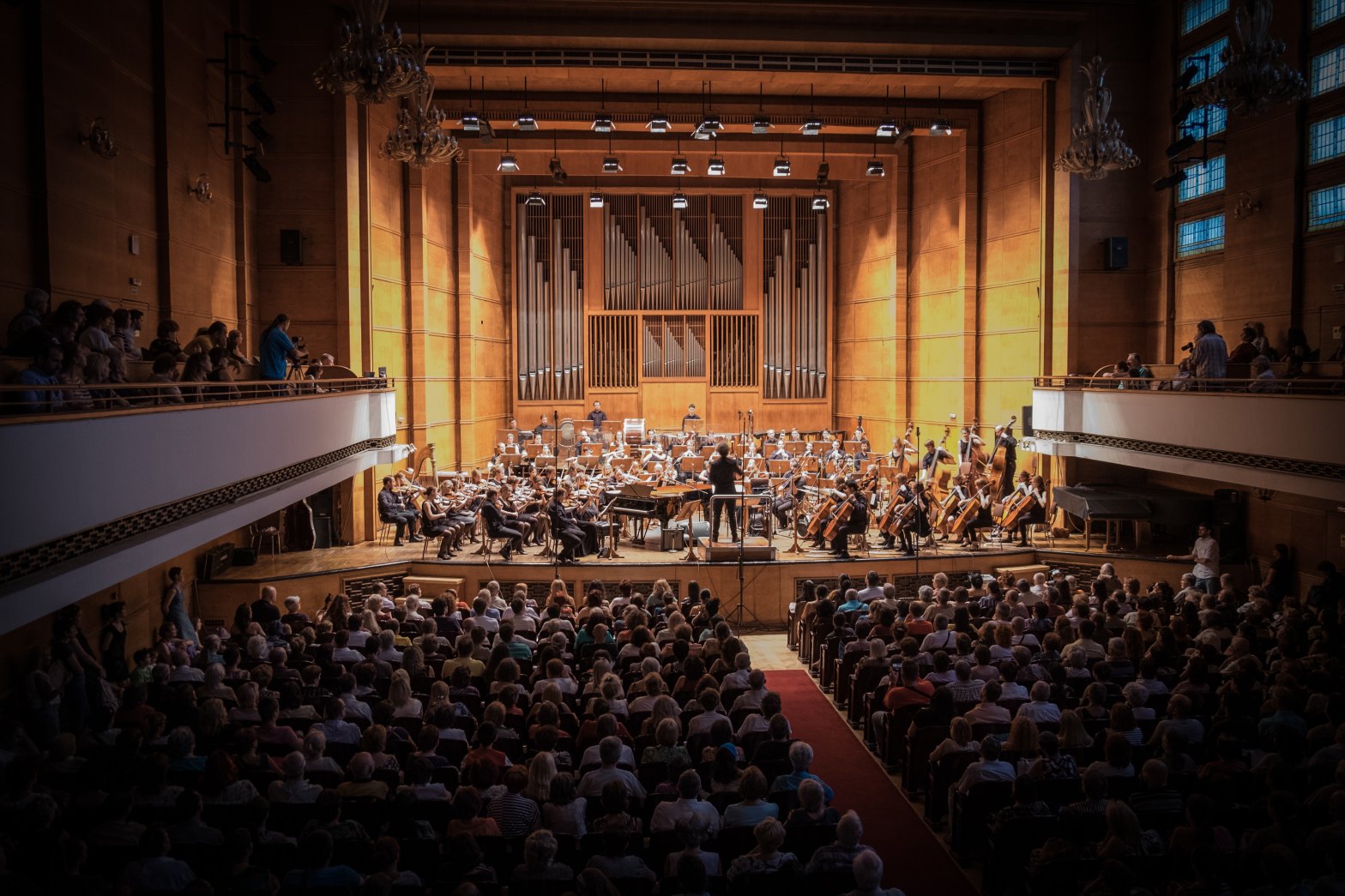
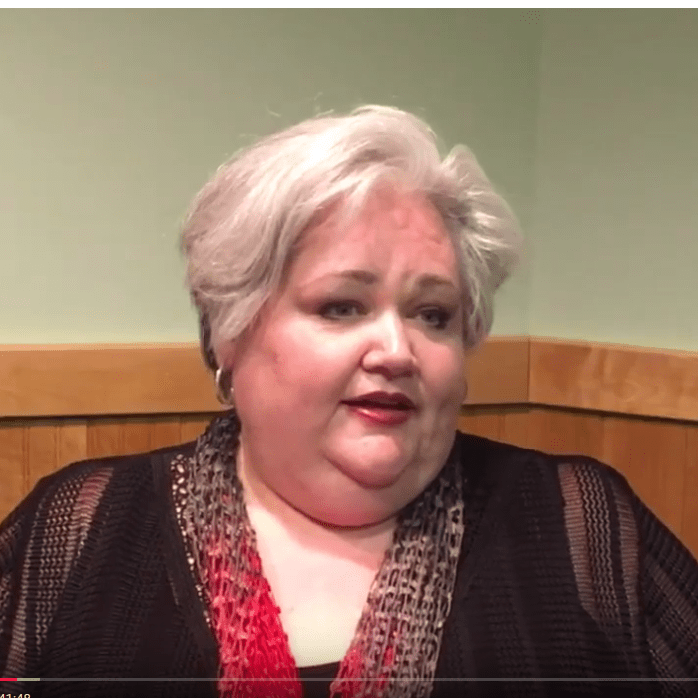
Renowned mezzo soprano Stephanie Blythe will premiere a new song cycle by composer Juliana Hall on Saturday, January 19, 2019 at the Sparks & Wiry Cries’ first songSLAM Festival at the DiMenna Center for Classical Music in New York City. Complete information about the songSLAM Festival – including links to purchase tickets – is available here.
The songSLAM Festival is a four-day celebration of new art song, with a “slam” evening (similar to a poetry slam) in which a program of composer-performer teams present new songs, with a winning song declared by audience appreciation, on Thursday, January 17th. Recitals of new and newly-commissioned works will be presented on Friday, January 18th (celebrating the creations of librettist Mark Campbell with various composers) and on Sunday, January 20th (new songs focusing on the topic #MeToo: Pathways to Healing).
The Festival’s Saturday, January 19th evening event will be a special recital called Expressions of Love: Stephanie Blythe and friends, and will include a new song cycle by composer Scott Gendel and a piece by composer-pianist Alan Louis Smith (performed by soprano Maggie Finnegan and pianist Daniel Overly), with parlour songs rounding out the recital (performed by Ms. Blythe and pianist Alan Louis Smith).
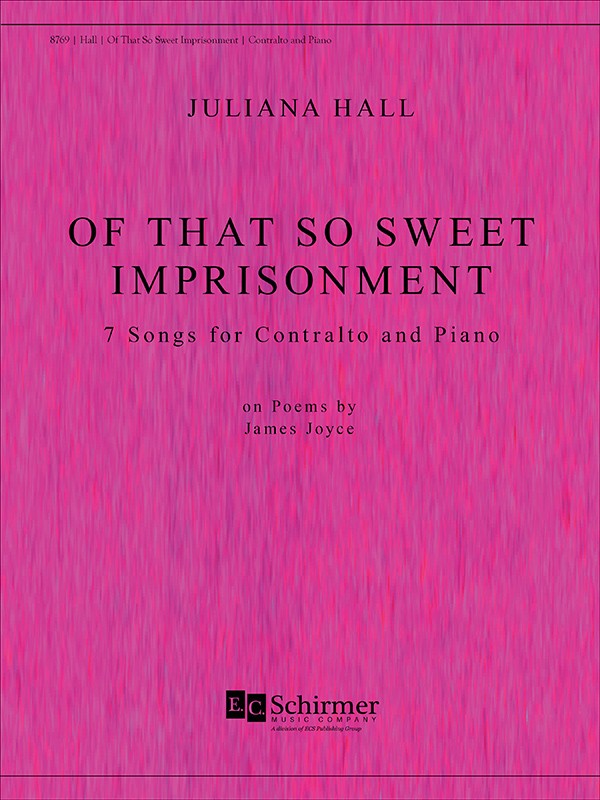
The other work on the January 19th program is Juliana Hall’s first contralto song cycle, Of That So Sweet Imprisonment, a work of seven songs on love poems by James Joyce. Composed by Hall for Ms. Blythe, this work is a celebration of love, about which Juliana Hall writes:
Of That So Sweet Imprisonment
When I first “met” Stephanie Blythe online a few years ago, I was not just thrilled to be “friends” with this beautiful singer for whom I have so much admiration, I was also surprised that she knew who I was, liked my songs, and wanted me to be a guest at her Fall Island Vocal Arts Seminar… a dream that came true last May. So in 2017 I wrote to Stephanie, “I’m going to be sixty soon, and I’d really like a special present for this milestone. Could I write you a song cycle?” Well, again to my surprise, she answered within a split second with a definitive “yes,” adding, “All I ask is that you consider writing the piece for the contralto voice. It is where I live so happily now, and there is just not enough out there for this particular voice type.” In short order I settled on a set of seven poems by James Joyce, love poems that are subtle, rich, and deep. There is a gentle narrative from the first to the last poem, following love (Orpheus perhaps) to the speaker’s desire to find her love, a declaration of wanting to be “imprisoned” by this love, a longing to be in a special place of love, a movement away from being a girl towards becoming a woman, a scene of harp music celebrating love (heaven perhaps), and finally a simple scene of lovers being together forever in a place special to them – all of which promised to elucidate Joyce’s beautiful vision of human love through the exquisite prism of the textures and colors of the contralto voice. This new work, Of That So Sweet Imprisonment, does not excite as a huge orchestral work might, nor does it amuse as a comedic song would, or impress through drama as a romantic opera might. What I hope it succeeds in doing, though, is to allow the intimacy of art song to touch upon perhaps our most profound human experience – that of love – in a way that only art song can: to reach that small, quiet inner voice of truth we come to know when we feel unconditionally loved by another and when we find ourselves able to love another without limit. While Stephanie Blythe certainly has the most amazing ability to produce the excitement, comedy, or drama of other types of musical works, I have heard her sing the most penetrating and powerful pianissimo notes I’ve probably heard any singer ever produce, and it is that ability to share the intimate, the small, and the personal that makes Stephanie the perfect singer to bring these songs into the world with clarity, purity, and beauty. It is my wish that Of That So Sweet Imprisonment might bring a breath of peace and inner warmth into each listener’s life, and help them to once again feel the pulsating life that love makes possible for each of us.
Juliana Hall recently appeared as the 2018 Guest Composer at Blythe’s Fall Island Vocal Arts Seminar. Blythe has complimented Hall’s work generously, stating:
“There is a beautiful alchemy that occurs when composer Juliana Hall meets a poem. Revealing each morsel of poetry through her brilliant tonal, textural, and rhythmic language, her work is immediately recognizable and wonderfully familiar. Singers and audiences alike take delight in her songs. Over the years, many of my young colleagues have brought her work for me to coach in my own song program, Fall Island Vocal Arts Seminar, but equally, I have heard her songs in virtually every university in which I have taught master classes over the last decade. Ms. Hall’s songs have a very important endorsement – singers want to sing them. Indeed, they love to sing them, and it is readily understood why. Her choice of text is varied, impressive and speaks to a wide cultural audience. The topics are relevant to today’s artists, and therefore, extraordinarily desirable. It is also incredibly evident that she understands the singing voice and the great art of collaboration with the pianist – there is a level of musical discourse here that demands expertise, and rewards the work with a generous and complete technical, interpretive and emotional experience. It is positively magical.”
Our friends at Sparks & Wiry Cries did this excellent interview with mezzo-soprano Stephanie Blythe ahead of their songSLAM festival. The festival will feature world premieres by Juliana Hall and Scott Gendel. Watch to find out what this great artist has to say about connecting with an audience, the importance of modern composers, and being on the brink of an art song renaissance.
Thursday, February 14, 7:30pm
“i thank you God”
Plano West Senior High School, Kathy Hackett, Conductor
TMEA Convention, San Antonio More info
Saturday, February 23, 7:30pm
“Madrigals for the Seasons”
Cappella SF, Ragnar Bohlin, Conductor
Mission Dolores, San Francisco More info
Saturday, February 23, 5:00pm
“Aria and Fugue”
Emil Miland, Cello; Eric Choate, piano
Episcopal Church of St. Mary the Virgin, San Francisco, CA More info
Monday, February 25, 7:30pm
Faculty Artist Recital
Works of David Conte
San Francisco Conservatory of Music Recital Hall More info
Wednesday, February 27, 7:30pm
“Everyone Sang” Four Songs for Baritone and Piano
Andrew Garland, Baritone; Kelly Kuo, Piano
Homer Rainey Hall, Jessen Auditorium, University of Texas at Austin More info
Friday, March 1, 7:30pm
“September Sun” (in memory of those who perished on 9/11)
West Shore Chorale, John Drotleff, Conductor
Cathedral of St. John the Evangelist, Cleveland, OH
Sunday, March 3rd, 7:30pm
Berkeley Hillside Club
Monday, March 4th, 7:30pm
SF Conservatory Recital Hall
“Sonata for Clarinet and Piano”
Left Coast Ensemble
Jerome Simas, clarinet
Eric Zivian, piano More info
Saturday, March 10, 7:30pm
First Presbyterian Church, Livermore, CA
“Dance” from “Invocation and Dance”
Valley Concert Chorale
Daniel Glover, Dominic Pang, pianists
John Emory Bush, conductor More info
Sunday, March 11, 3:00pm
Trinity Lutheran Church, Pleasanton, CA
“Dance” from “Invocation and Dance”
Valley Concert Chorale
Daniel Glover, Dominic Pang, pianists
John Emory Bush, conductor More info
Saturday, March 16th, 8:00pm
“A Copland Portrait”
Bay Area Rainbow Symphony; Dawn Harms, conductor
Wilsey Center – Taube Atrium Auditorium, San Francisco More info
Sunday, March 17th, 3:00pm
“September Sun”
The San Francisco Conservatory Chorus & the Calvary Chapel Choir
Calvary Presbyterian Church, San Francisco More info
Friday, May 3, 8:00pm
“Hosanna”
Swarthmore College Chorus; Joseph Gregorio, conductor
Lang Music Center More info
Saturday May 18, 8:00pm
Sunday May 19, 3:00pm “Goodbye, My Fancy”
Golden Gate Men’s Chorus, Joseph Piazza, conductor
Anders Paulsson, Soprano Saxophone
Mission Dolores Basilica, San Francisco More info
Saturday, June 1, 6:00pm
“Everyone Sang,” “Good-bye, My Fancy,” and “Invocation and Dance”
Empire Men’s Chorus Silver Anniversary Gala; Vince Peterson, conductor
St. Bartholomew’s Episcopal Church, New York More info Opera Wire Broadway World
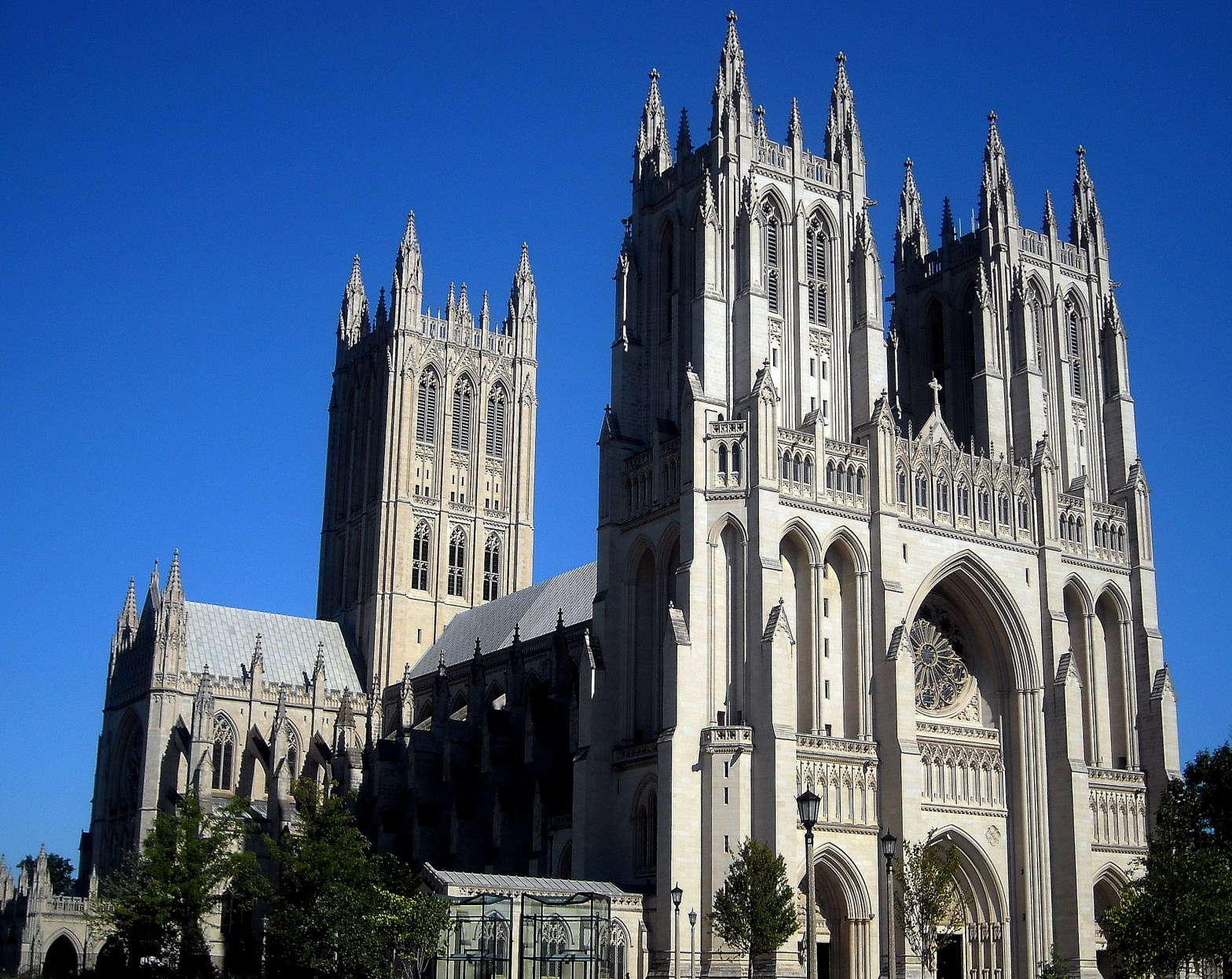
The Washington National Cathedral Series is designed to be representative of the vibrant music making present in this great Cathedral. The series features anthems and instrumental pieces that are reflective of the emphasis the Cathedral places on being a National spiritual resource for people of all faiths and perspectives. The series is edited by the Cathedral’s Music Director, Michael McCarthy, who was appointed to the position in the summer of 2003.
Visit the series page to view all of the great pieces in this collection.
2019 is the 100th anniversary of Paul Manz’s birth. In honor of the occasion, we’re reminding ourselves of the incredible contributions Manz made to church music, and invite you to join in. If you are performing any of Manz’s works in 2019, let us know in the comments!
To view all of Manz’s works with MorningStar, click here.
Paul Manz long served the church as recitalist, composer, teacher and leader in worship. He was Cantor Emeritus at the Evangelical Lutheran Church of Saint Luke, Chicago, Illinois; as well as Cantor Emeritus of Mount Olive Lutheran Church in Minneapolis, Minnesota. He was the director of the newly established Paul Manz Institute of Church Music, and was Professor Emeritus of Church Music at Christ Seminary Seminex at the Lutheran School of Theology in Chicago.
A Fulbright grant enabled him to study with Flor Peeters in Belgium and Helmut Walcha in Germany. The Belgian government invited him to be the official United States representative in ceremonies honoring Flor Peeters on his 80 th birthday and his 60 th year as titular organist of the Cathedral of Saint Rombaut in Mechelen, Belgium. At that time, Flor Peeters referred to his former student as “my spiritual son.”
Paul Manz concertized extensively in North America. He appeared at the Lincoln Center in New York City, with the National Symphony Orchestra at the Kennedy Center in Washington, D.C., with the Chicago Symphony Orchestra at Orchestra Hall and with the Minnesota Orchestra under the direction of Charles Dutoit, Leonard Slatkin, and Henry Charles Smith. In addition, he played recitals in churches and cathedrals here and abroad. He was in great demand for his hymn festivals, which are his legacy as a church musician. He conducted many organ clinics, participated in liturgical seminars and appeared as lecturer and recitalist at the regional and national conventions of the American Guild of Organists.
The esteem and respect with which Paul Manz is regarded can be seen in the many honors he has received. He was twice named one of the “Ten Most Influential Lutherans.” He served as National Councilor of the American Guild of Organists and is listed as one of the “101 Most Notable Organists of the 20th Century.” He was the recipient of many honorary doctorates and awards. Northwestern University, his alma mater, presented him with the prestigious “Alumni Merit Award”; The Lutheran School of Theology, Chicago presented him with the distinguished “Confessor of Christ Award”; The Chicago Bible Society presented him with the “Gutenberg Award”; and the Lutheran Institute of Washington, DC honored him with the first “Wittenberg Arts Award”. At a convention of the Association of Lutheran Church Musicians, his colleagues honored him for his work in the church. A large gathering in Minneapolis, Minnesota held a “Paul Manz Celebration: Honoring the Life of a Church Musician” where substantial gifts were given to the Ruth and Paul Manz Scholarship for Church Musicians.
Trinity Seminary of Columbus, Ohio bestowed the “Joseph Sittler Award for Theological Leadership” and among his many honorary doctorates is the Doctor of Sacred Music degree from Valparaiso University, Indiana, and most recently, the Doctor of Music degree from St. Olaf College, Northfield, Minnesota.
His musical compositions are internationally known. His organ works are extensively used in worship services, recitals and in teaching. His choral music is widely used by church and college choirs here and abroad. His motet, “E’en So, Lord Jesus, Quickly Come” is regarded as a classic and has been frequently recorded here and abroad. His life and works is the subject of a doctoral dissertation which details his career spanning more than fifty years and analyzes his organ works.
The national ACDA conference is just around the corner, and we couldn’t be more excited. In addition to a great booth setup featuring our latest choral music alongside perennial favorites, we wanted to highlight our other activities so you can start filling in your schedule. The conference is in Kansas City, MO, and runs from February 27 to March 2.
Composer Fair
Wednesday, February 27
5:00-7:00pm
This year’s conference will feature a brand new event–the composer fair! We’re excited for you to meet composers like Karen Marrolli, Michael John Trotta, and Howard Goodall, and learn more about their music directly from the source.
Reading Sessions
MorningStar
Thursday, February 28
11:00-11:50am
This reading session will feature new music for church. Don’t miss the chance to see Karen Marrolli, Howard Goodall, and Tom Trenney lead their own pieces! A complete listing of this session is available here.
E. C. Schirmer/Galaxy
Friday, March 1
3:00-3:50pm
This is session includes our latest offerings for school and concert settings. View a complete listing of the pieces in this session here.
Stainer & Bell
We’re especially excited to welcome one of our European publishing partners, Stainer & Bell, to their first ACDA conference! It’s a great oppurtunity to get a hands-on look at their publications, and as always, you can order almost all of their materials through us to save on international shipping costs. Their booth will be right next to ours, so make sure to stop by and say hello.
It’s that time again! Orchestras and choruses around the country are gearing up for Christmas concerts, and many of them are performing music by composer Randol Bass. Check out the list below to see where Bass’ music will be performed this winter!
Between 2002 and 2006, the local currency in Ghana included a 20,000-cedi note with the image of composer Ephraim Amu. These spaces are normally reserved for famous political leaders, generic situations that project the country’s industry and culture, and historic sites. That Dr. Amu shared this company speaks to the very high regard in which he is held. Indeed, Ephraim Amu is probably the best-known cultural icon of twentieth-century Ghana.
Talk to primary school pupils about the songs they sing at assembly, and they will invariably mention Yɛn ara asase ni (This is our own land). Some of them will refer to it as Ghana’s national anthem; the more discerning will describe it as the unofficial national anthem. Neither designation is correct. The national anthem (originally “Lift high the flag of Ghana,” later “God Bless our homeland Ghana”) was composed in 1957 to English words in a stately, hymn-like and quite un-African idiom by Philip Gbeho, and remains in regular use for official functions and ceremonies. Yɛn ara asase ni, composed in a more indigenous idiom to Twi words, is a patriotic song; it is widely popular because it captures more readily an African musical sensibility. If you ask those school children what they like about it, they will probably say that the song is sweet and that its words fill them with pride.
Talk to another group of educated Ghanaians about broadly cultural matters, especially those who came of age in the years leading up to the country’s Independence in 1957, and who have had the benefit of either a secondary school or teacher training college education. Dr. Amu’s name is likely to emerge in connection with passionate advocates for African culture, role models for what was once called ‘African personality.’ Some indeed may recall encountering one or two of Amu’s compositions as members of a school choir.
Felicia Sandler
Until now, Ephraim Amu has been visible mostly as a national figure. This is partly a function of the circumstances in which he worked as a musician, teacher, catechist, and educator. He wrote mostly choral music using texts in Ghanaian languages, and he often wrote for specific choirs and specific occasions. He was not aiming at an anonymous global audience. No condition is permanent, however, as the song writer says, so it is not surprising that Amu’s nationalism is on the verge of yielding to an internationalism. The publication by Galaxy Music of three of Amu’s most popular songs in a beautiful critical edition made by Professor Felicia Sandler will surely hasten their accessibility to many professional and amateur choirs in the United States. Amu’s unique choral idiom, cultivated under the influence of European colonialism and missionization, yet marked by African rhythms, melodic turns and poetic expression, exudes a fresh, coming-of-age quality that has been celebrated in his native Ghana and that will surely appeal to musicians around the globe.
Amu was an imaginative poet-composer, and many who learn his songs are immediately drawn into an enticing world of memorable, word-borne melody, exhilarating rhythms, and an undercurrent of natural harmony, tweaked in unexpected ways, sometimes under the influence of a species of parallelism common in indigenous music, sometimes in deference to the four-part harmony that the composer encountered in Protestant hymns and associated idioms. Writing in two Ghanaian languages, Ewe and Twi, Amu sought to capture pertinent thoughts and aspirations of his community and to convey them in pithy language. His best-known songs are mainly in Twi, the most widely-spoken language in Ghana. As a non-native speaker, Amu learned an idiomatic Twi that took him to the heart of indigenous expression. His song texts are peppered with vivid images, wise sayings, and challenges to self- and communal improvement.
Before Christian missionaries arrived in Amu’s hometown of Peki in the 1840s, no one sang using the popular SATB arrangement that practically every Western choir takes for granted. No one drew on Biblical sources for song texts, and no one composed choral music on paper for performance by trained choirs. All of that changed three or so generations later, thanks to Amu, who had grown up with deep influences of indigenous cultural practice (his father was a drummer), on the one hand, and with exposure to and curiosity about selected idioms of eighteenth-century European tonal music, on the other. Amu wrote a series of choral works for various occasions, each one cementing an idea, an aspiration, an admonition. He was in that sense a pioneer and, in retrospect, a visionary. Amu’s practices eventually gelled into a model of choral composition that became hugely successful—satisfying for performers and audiences alike, and available for imitation by budding composers. Indeed, it is hard to think of a single successful composer of choral music in Ghana who has not in some measure been influenced by Amu. Today, one can hear Amu’s music performed in schools, churches, community and work-place choirs, or in arrangements for brass bands.
The three song settings published by Galaxy are among Amu favorites, and they are likely to become favorites for American performers too, once they master Amu’s individual idiom. Yɛn ara asase ni is a patriotic song composed in 1929. It was originally written to Ewe words and then fitted with Twi words two years later. Every schooled Ghanaian knows this song, even if they do not have full control over the words of subsequent stanzas. The song’s rhythms are emphatic, the melody is well suited to the speech tones—no mean achievement given that the original was in Ewe—and the refrain is memorable because it incorporates a responsorial element found in much African traditional music. Amu maintains a diatonic base but occasionally incorporates the flattened-seventh degree of the scale in an endearing way. American singers may need the assistance of a Twi-speaking coach to help render the Twi words accurately, and they may have to time-travel to 1930s West Africa to begin to glimpse the joint influences of Empire, Christian missions and collective hopes for self-determination.
In Asɛm yi di ka(This talk has got to be spoken), composed in 1944, the emphasis is on the spoken word. Amu’s phraseology is particularly charming here. Subphrases end on relatively short notes followed by silences, giving the song a certain enunciatory character and thus enhancing its communicative value. The spoken word, complete with the intrinsic musical baggage it carries from tone languages, lies at the root of Amu’s expression, and singers will have the opportunity, here and elsewhere, to experience that magnificent fusion of word and tone that has made so many of Amu’s songs memorable to generations of Ghanaians.
Adawura bɔme (I am the bell), composed in 1943, is a lively and satisfying exercise in polyrhythm. While polyrhythm is often associated in Africa with instrumental ensemble music, it is produced here by voices. At the core is a three-against two feel, the sine qua non of African rhythm, and a constant presence in Amu’s scores. Speaking these distinct, layered rhythms will give singers a feel for some of the energy that comes from this brand of simultaneous doing.
Ephraim Amu died in 1995 at the age of 95. Already a legend in his lifetime, he has grown in stature posthumously. Scholars have become more keenly aware of the size and diversity of his output. Students of religion and culture have also become aware of Amu’s work as a theologian, nationalist and patriot. We owe an incalculable debt to Professor Sandler, who has undertaken the mammoth task of making Amu’s music available to a larger public in an authoritative critical edition for which these three songs provide a taste. This edition will do justice—for the first time—to the composer’s vision and achievement. May all who engage these gems of African choral music draw satisfaction from the close and cosy harmonies, the melodic inflexions, the vital rhythms, and the inspiring verbal messages, and may Amu’s music find audiences well beyond the ones that he imagined in 1931.
Kofi Agawu was born in Ghana, where he received his initial education before studying composition and analysis in the UK and musicology in the US. He has taught at Haverford College, King’s College London, Cornell, Yale and Harvard; held visiting positions at the University of Hong Kong, Indiana University, University of Toronto, the University of Pavia, Cremona, and Oxford University; and lectured at numerous universities and conferences around the world. In 2012-13, he was appointed George Eastman Visiting Professor at Oxford University, becoming only the second music scholar to have held that position since its endowment in 1930. He has served on the editorial boards of leading journals in musicology, music theory, African music and ethnomusicology, and on several fellowship panels.
Agawu’s work is widely discussed and frequently cited for its interrogative quality. Tony Lewis remarks on Agawu’s role in “recasting African music as a musicological rather than ethnomusicological topic”; Veit Erlmann wrote that Representing African Music (2003) is “without any doubt the most powerful intervention in African musicology in a decade or more . . . one of the most edgy and stylish pieces of writing on the politics of culture in postcolonial Africa to have appeared of late”; and Music as Discourse (2008) elicited the following from Raymond Monelle: “The painstaking clarity of the analyses will surely be imitated by a generation of bright students . . . radical and challenging . . . easy to absorb yet infinitely sophisticated . . . elegant and rich . . . needs to be lived with and digested.”
Agawu’s current research includes essays on rhythm and iconicity in African music, and further studies in topic theory.






 In Tune blog